In a dramatic protest highlighting severe systemic issues, staff at Delhi's lower courts announced a boycott of the upcoming National Lok Adalat on Friday. This drastic step came in the wake of the tragic suicide of a 43-year-old court employee, Harish Mahar, who cited unbearable work pressure as the reason for taking his own life.
A Protest Born from Tragedy
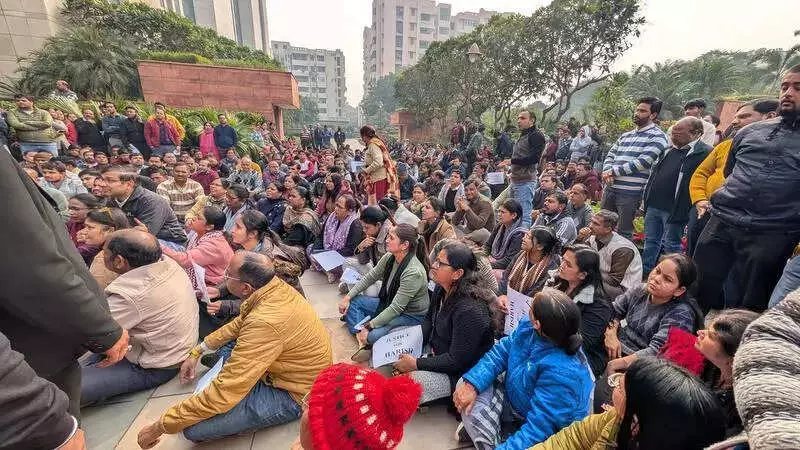
The boycott, which was set to affect all lower courts in the national capital, was a direct response to the death of Harish Mahar, an ahlmad at the Saket District Court. The staff collectively termed his death a "byproduct of systemic shortage of lower court staff." Around 100 district court employees gathered outside the Delhi High Court, voicing their anguish and pressing for immediate action.
Their demands were clear and urgent: providing monetary assistance to Mahar's grieving family, implementing concrete measures to reduce the crushing work pressure on court employees, and granting overdue promotions to staff who have been in service for over a decade. The protesters, joined by colleagues from multiple zones, alleged that chronic understaffing combined with ever-mounting case volumes had pushed court employees to a breaking point.

From Sit-in to High Court Vigil
The day of protest began with a sit-in at the Saket court complex. Seeking resolution, the staff later held a meeting with Gurvinder Pal Singh, the principal district and sessions judge (south). However, union members reported that this meeting yielded no positive outcome.
Determined to amplify their voice, the protesting staff then moved to the Patiala House Courts to mobilise more workers. Their final destination was the Delhi High Court, where they held a vigil, awaiting a response from the higher judiciary.
Boycott Called Off After Assurance from Chief Justice
The turning point came after a two-hour meeting with Delhi High Court Chief Justice DK Upadhyay. Following this discussion, the staff association decided to call off its planned boycott of the Lok Adalat scheduled for Saturday.
The association stated that the Chief Justice had passed directions concerning all their demands. While the specific details of these directions were not immediately disclosed, the assurance from the highest judicial authority in Delhi was sufficient for the staff to suspend their protest and allow the Lok Adalat to proceed.
This incident has starkly illuminated the human cost of administrative bottlenecks within India's judicial infrastructure. It underscores the urgent need for addressing staff welfare and systemic reforms to prevent such tragedies in the future.