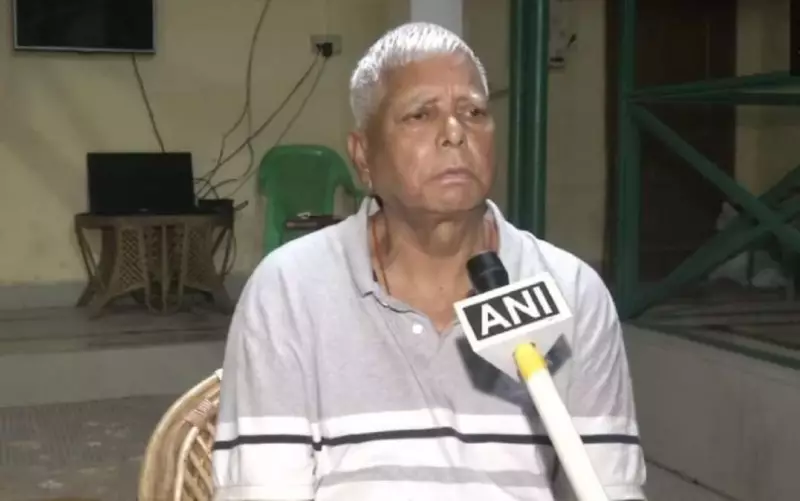
A Delhi court has taken a significant step forward in the high-profile land-for-job scam case, formally framing charges against Rashtriya Janata Dal (RJD) chief Lalu Prasad Yadav. The court, in a strongly worded observation, stated that the Yadav family allegedly acted as a 'criminal syndicate' to acquire prime land in exchange for lucrative railway jobs during Lalu's tenure as the Railway Minister.
Court's Scathing Observations and Charges Framed
The court of Special Judge Geetanjli Goel, designated to hear cases from the Central Bureau of Investigation (CBI), framed charges under sections of the Indian Penal Code related to criminal conspiracy and provisions of the Prevention of Corruption Act. The judge noted that the evidence presented by the prosecution prima facie indicated a well-organized scheme.
The court stated that the acts of Lalu Prasad Yadav, his wife Rabri Devi (former Bihar Chief Minister), and daughter Misa Bharti were not isolated but pointed towards a collective family enterprise operating with a common intention. This characterization of the family unit as a 'syndicate' underscores the prosecution's claim of a systematic and organized modus operandi.
The Alleged Scam: Land in Return for Jobs
The case, investigated by the CBI, revolves around allegations that between 2004 and 2009, when Lalu Yadav was the Union Railway Minister, several individuals were appointed to Group 'D' positions in various zones of the Indian Railways. In return, these appointees or their family members allegedly transferred their land parcels to the Yadav family and their associated companies at highly discounted rates, or in some cases, as outright gifts.
These land plots, located in desirable areas of Bihar, were purportedly acquired for a fraction of their market value. The CBI alleges that this was a clear quid pro quo arrangement, where coveted government jobs were bartered for valuable real estate, causing a loss to the public exchequer and undermining the fair recruitment process.
Legal Proceedings and Next Steps
With the charges now formally framed, the stage is set for the commencement of the trial. The court has directed the prosecution to present its witnesses and evidence. The accused, including Lalu Yadav, have pleaded not guilty and will have the opportunity to contest the charges and present their defense.
This development marks a critical juncture in a case that has significant political ramifications in Bihar and at the national level. The RJD has consistently dismissed the allegations as politically motivated, but the court's decision to proceed with the trial ensures the legal battle will intensify. The next hearing is expected to focus on the examination of prosecution witnesses.
The framing of charges is a legal prerequisite before a full trial can begin. It signifies that the court, after reviewing the initial evidence (charge sheet) filed by the CBI, has found sufficient grounds to believe that the accused committed the alleged offenses. The burden now shifts to the prosecution to prove the charges beyond a reasonable doubt.