CJI Surya Kant Stresses Prudence and Thoughtful Engagement at NUJS Convocation
Chief Justice of India Surya Kant delivered a powerful address at the 15th convocation ceremony of West Bengal National University of Judicial Sciences. The event marked the first convocation since 2022 after a four-year gap. Justice Surya Kant, who also serves as the Chancellor of NUJS, spoke to around 1,050 graduates from the classes of 2021 to 2025.
Prudence Over Knowledge
The CJI emphasized that prudence distinguishes individuals more than hard work alone. "Knowledge can be acquired quickly," he stated. "Prudence is knowing when to speak and when silence carries greater weight. It is knowing which battles deserve your energy and which merely exhaust it." He highlighted this quality as essential for legal professionals navigating complex challenges.
Legal Education's True Purpose
Justice Surya Kant explained that legal education at its best does not provide ready solutions. It shapes how you think when solutions are unclear. He noted that this education gives the ability to remain steady when facts are uncomfortable and when interests collide. "As years pass, you may find that most enduring lessons from NUJS were not confined to examining court work. They were embedded in conversations that stretch beyond classrooms," he remarked.
A Moment of Return
The CJI acknowledged the delayed nature of this convocation. "This convocation has taken its time in arriving," he said. "What makes today's event particularly special is that it is not just a moment of transition but a moment of return." Many graduates had already entered professional environments, facing demanding work that often differed from campus studies. "The law outside the campus may not always resemble what you studied. Files must be heavier than textbooks," he observed.
Navigating an Age of Immediacy
Justice Surya Kant addressed the challenges of modern professional life. "We live in an age of immediacy where opinions are formed instantly, and responses are expected without waiting," he said. In such a world, judiciousness has become rare and deeply valuable. He advised graduates to allow themselves room to pause and step away when necessary without apology, then reenter work with purpose.
The ability to unwind and slow down at the right intervals is not a retreat from professional responsibility. Rather, it sustains that responsibility. The CJI described the legal profession as a long and demanding journey where pausing helps restore balance, reorder priorities, and reconnect effort with meaning.
Global Context and India's Role
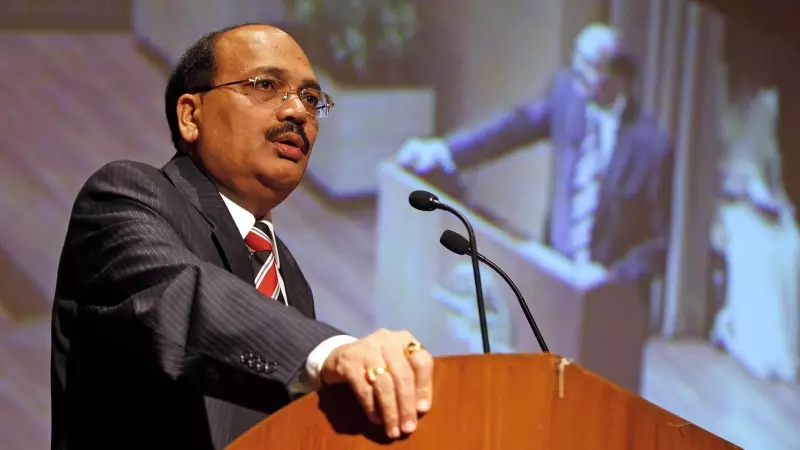
Professor Ranbir Singh, chairperson of the Central Criminal Law Reforms Committee and founding Vice Chancellor of NALSAR and NLU Delhi, also addressed the gathering. He noted the world is passing through difficult times, sitting on the verge of another World War. "When the world is going the other way, India — the fastest growing economy and the biggest democracy — has to play an important role in balancing conflicting interests at the global level," Professor Singh told students.
Distinguished Gathering
The convocation ceremony saw participation from several eminent legal figures:
- Calcutta High Court Chief Justice Sujoy Paul
- Supreme Court Justices Dipankar Dutta and Joymalya Bagchi
- Chief Justice of Kerala High Court Soumen Sen
- Advocate General of Calcutta High Court Kishore Dutta
- Ministers Moloy Ghatak and Chandrima Bhattacharya
The event provided a significant platform for reflection on legal education's enduring value and the practical challenges awaiting new graduates. Justice Surya Kant's message centered on thoughtful engagement over constant urgency, positioning prudence as the cornerstone of professional distinction.