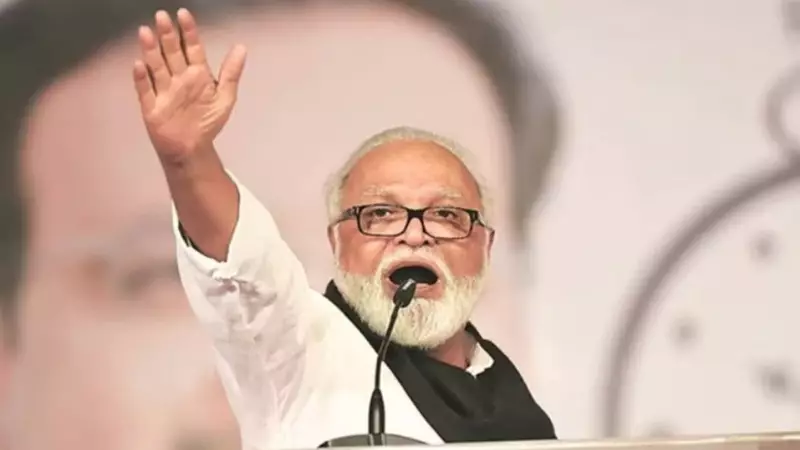
A special court in Mumbai has discharged Maharashtra Cabinet minister and Nationalist Congress Party (NCP) leader Chhagan Bhujbal, along with his son Pankaj and nephew Sameer, in a money laundering case filed by the Enforcement Directorate (ED). The case, which dates back to Bhujbal's arrest in 2016, is connected to alleged irregularities in the Maharashtra Sadan scam, involving contracts worth over Rs 100 crore.
Court Ruling Based on Previous Discharge
The discharge order was issued on Friday, with the court accepting arguments from Bhujbal's lawyers, Sajal Yadav and Sudarshan Khawase. They contended that since Bhujbal and the other accused were discharged in 2021 in a corresponding case filed by the state Anti-Corruption Bureau (ACB) regarding the Maharashtra Sadan scam, the ED case cannot proceed under a previous Supreme Court order. The lawyers emphasized that the ACB discharge order has attained finality, as it was not set aside by the high court since 2021.
Background of the Maharashtra Sadan Scam
The ACB initially filed a case against Bhujbal in 2015, following a Public Interest Litigation in the Bombay High Court. The inquiry focused on alleged irregularities in awarding contracts for three projects in 2006, when Bhujbal served as the Maharashtra Public Works Department (PWD) minister. The contracts, valued at over Rs 100 crore, were awarded to Chamankar Developers for:
- Construction of Maharashtra Sadan in Delhi
- A new Regional Transport Office building in Andheri
- A state guest house in Malabar Hill
The ED subsequently filed a separate money laundering case, alleging that the contracts were granted without following proper rules in exchange for kickbacks to firms and trusts controlled by the Bhujbal family. However, the Bhujbals argued that no evidence was found against them, leading to their discharge in the ACB case.
Legal Proceedings and Implications
Bhujbal spent over two years in jail in this case until the Bombay High Court granted him bail in 2018. With this latest discharge, all charges under the Prevention of Money Laundering Act (PMLA) have been cleared for Bhujbal, his son, and nephew. This development leaves only one ACB case pending against Bhujbal, which relates to a library at Mumbai University.
The ruling highlights the interplay between state and central agencies in corruption cases, with the court relying on the finality of the ACB's discharge to dismiss the ED's money laundering allegations. It underscores the legal principle that once a primary case is discharged, ancillary proceedings may not sustain without fresh evidence.