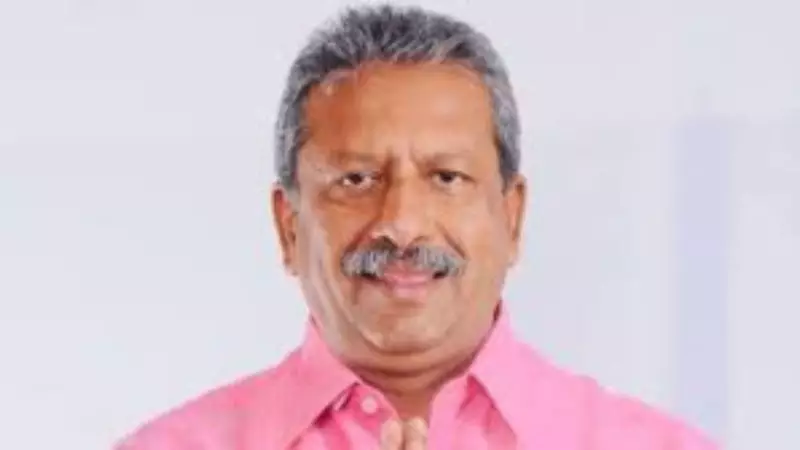
Karnataka Police Present CDR Evidence Linking BJP MLA to Realtor Murder Accused
The Criminal Investigation Department (CID) unit of the Karnataka Police presented compelling call detail records (CDR) analysis before the Karnataka High Court on Thursday, alleging BJP MLA Byrathi Basavaraj's involvement with a criminal gang accused of murdering Bengaluru realtor V G Shivaprakash, also known as Bikla Shiva. The evidence was submitted by Special Public Prosecutor B N Jagadeesh to oppose the anticipatory bail plea filed by the legislator, who is named as an accused in the high-profile case.
Call Records Challenge MLA's Claims of Non-Association
SPP Jagadeesh meticulously presented CDR analysis based on mobile tower locations and call records to counter Basavaraj's previous statements during police questioning in July 2025. The MLA had claimed no knowledge of or association with key accused individuals Jagadish (accused number 1), Kiran K (accused number 2), and Ajith Kumar (accused number 20). However, the prosecution argued that the digital evidence clearly demonstrates otherwise.
The prosecutor told the court that these records were produced specifically "to demonstrate that the petitioner has tried to mislead the investigation." He emphasized that Basavaraj's assertion about photographs with the accused being merely part of political public life does not align with the substantial communication patterns revealed through the CDR analysis.
Travel Evidence Reveals Coordinated Movements
One of the most significant revelations presented in court involved travel records showing Basavaraj and the key accused traveling together to Prayagraj for the Kumbh Mela between February 10 and 12, 2025. The prosecution presented evidence that they shared the same flight with identical PNR numbers, indicating coordinated travel arrangements.
The geo-mapping analysis of mobile phones belonging to Jagadish, Kiran, and Kumar showed they were consistently in the same locations as the MLA on multiple occasions, both before and during the alleged planning of the murder. Tower location data further revealed that calls were made from these locations to associates in Bengaluru regarding the real estate dispute over 13 guntas of land in Kithaganur village.
Post-Murder Phone Activity Raises Suspicion
The prosecution highlighted suspicious patterns following the July 15, 2025 murder of Shivaprakash on a public street in east Bengaluru. All key accused individuals switched off their mobile phones immediately after the incident, with some, including prime accused Jagadish, leaving the city shortly thereafter. This coordinated behavior was presented as evidence of premeditated action following the crime.
Allegations of Police Complicity and Intimidation
SPP Jagadeesh made serious allegations about local police involvement, claiming they were "hand in glove" with Basavaraj. He presented evidence that two complaints filed by Shiva in February and March 2025 regarding death threats and an attempted murder were not properly investigated. One attempt to murder complaint was recorded as a non-cognisable report (NCR) and subsequently closed by the Rama Murthy Nagar police.
The prosecutor produced the station house diary to show that gangster Jagadish was never called for questioning despite being a suspect. A person who abandoned a scooter near Shiva's office was only called for investigation on July 31, 2025, well after the murder had occurred and the NCR had been officially closed.
Victim's Family Testimony and Prosecution's Argument
The court was informed that Shiva's mother, who had named Basavaraj as an accused, testified about threats her son received from the MLA and his associates regarding property deals. Although she had reportedly been threatened to retract her statement, she maintained her testimony in court.
"This is a classic case of frustrating investigations and the judicial process," argued SPP Jagadeesh, emphasizing the state's duty to protect common citizens. He stressed the need for custodial interrogation of the MLA, stating, "We want interrogation in custody because he is not an ordinary person."
The prosecution's comprehensive presentation of digital evidence, travel records, and allegations of investigative interference forms a substantial case against the anticipatory bail plea, highlighting what they describe as an organized crime network operating around property disputes in Bengaluru.