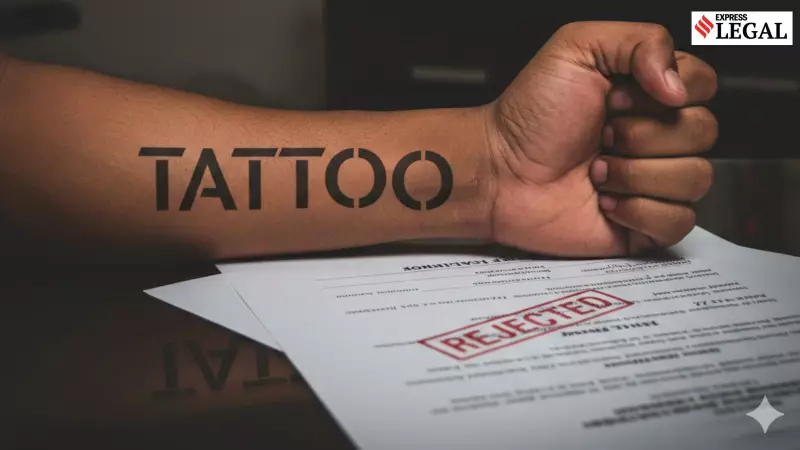
Calcutta High Court Clarifies Tattoo Policy for Central Armed Police Forces Recruitment
In a significant ruling, the Calcutta High Court has addressed a critical question regarding eligibility for the Central Armed Police Forces (CAPFs): can a candidate join after removing a tattoo? The court dismissed a petition filed by an aspirant, Jhantu Sarkar, who sought appointment despite being declared unfit due to a tattoo during the detailed medical examination (DME).
Court's Decision and Legal Rationale
Justice Saugata Bhattacharyya, presiding over the case, emphasized that a candidate's medical fitness must be evaluated based on the condition existing on the date of the DME. The court ruled that removing a tattoo after this examination and before a review medical examination (RME) is not permissible under the applicable recruitment guidelines. This decision aligns with a previous verdict from January 2, 2026, in a similar case involving Rahul Bari.
The court stated, "If there is an anomaly in Detailed Medical Examination, candidate has a right to prefer review before the concerned medical board, but removal of tattoo after Detailed Medical Examination and prior to Review Medical Examination in pursuit of being declared medically fit is found to be not permissible." This underscores the strict adherence to medical standards set forth in the revised guidelines for CAPFs and Assam Rifles recruitment from May 2015.
Case Background and Petitioner's Arguments
Jhantu Sarkar participated in the recruitment process for a general duty constable position under CAPFs. He underwent a DME on November 29, 2025, where medical authorities declared him unfit due to a tattoo on his right forearm. Subsequently, he removed the tattoo on December 1, 2025, and appeared for an RME on December 4, 2025. However, the review board again declared him unfit, citing a superficial burn mark from the removal process.
Advocates representing Sarkar argued that the rejection was overly technical and defeated the purpose of the review. They contended that medical authorities should assess fitness at the RME stage rather than rigidly adhering to the DME condition. The petitioner's counsel highlighted that the tattoo had been removed prior to the RME, urging the court to consider this change.
Centre's Stand and Court's Final Ruling
In opposition, advocates for the Centre maintained that medical eligibility must be judged as per the condition on the DME date. They argued that subsequent tattoo removal cannot improve a candidate's position in the RME, as this would undermine the uniformity and integrity of the recruitment process. The Centre referenced the Rahul Bari case, which involved identical facts, to support their stance.
The Calcutta High Court ultimately dismissed the plea, holding that Sarkar was not entitled to be considered fit for appointment. The court reinforced that the health condition, including tattoo marks, must be assessed based on the situation existing on the DME date. This ruling clarifies that post-examination corrections, such as tattoo removal, are not allowed under current guidelines.
Broader Implications and Legal Context
This decision highlights the stringent medical standards in CAPF recruitment and sets a precedent for similar cases. It distinguishes from other rulings, such as the Delhi High Court's decision in the Deepak Yadav case (2024), where tattoo removal occurred before the first medical examination, and the Supreme Court's order in the Dharmvir Singh case (2019), which dealt with a medical condition requiring expert reassessment, not tattoo-related disqualification.
The ruling serves as a reminder to aspirants about the importance of adhering to recruitment guidelines from the outset. It underscores the judiciary's role in upholding procedural integrity in public service appointments, ensuring fairness and consistency across all candidates.