Calcutta High Court Orders Reconsideration of 32-Year Inmate's Premature Release
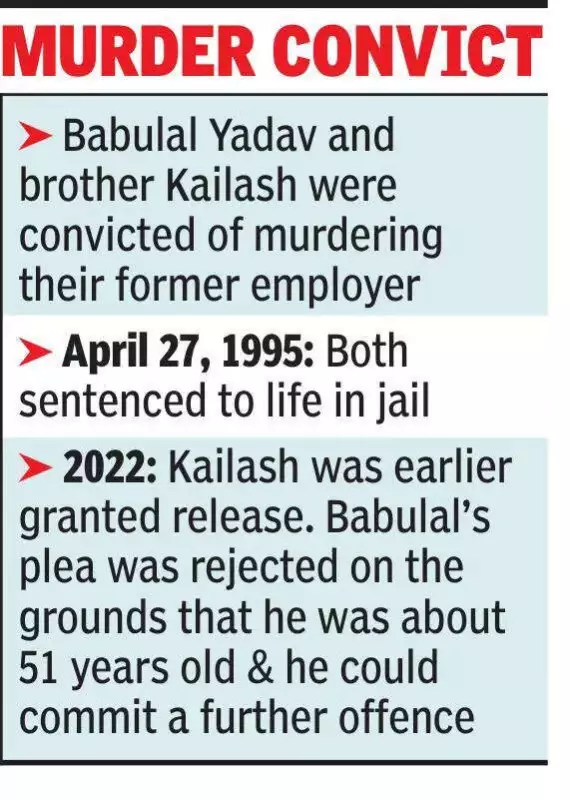
In a significant ruling, the Calcutta High Court has directed the judicial department to reconsider the premature release of a 51-year-old man who has served a sentence for 32 years for murdering his former employer. The court emphasized the purpose of correctional homes in reforming inmates and reintegrating them into society.
Court's Emphasis on Correctional Home Reforms
The division bench of Justice Arijit Banerjee and Justice Apurba Sinha Ray highlighted that jails were renamed correctional homes with the high hope that inmates could be brought back into the mainstream after undergoing reforms. The bench stated, "Several corrective measures were introduced to facilitate this transformation." This underscores the court's focus on the rehabilitative aspect of the penal system.
Judicial Department's Refusal and Court's Critique
Although the convict's prayer for premature release was considered in 2022 and the state sentence review board recommended his release, the judicial department refused approval. The department cited concerns that the convict, being about 51 years old, might commit further offences. The court strongly criticized this reasoning, holding that it was "more speculative than logical."
The bench further stated, "If after almost 32 years of serving a sentence, the convict's prayer for premature release is refused by the judicial department, the impression is that the state failed to discharge its obligation to reform the convict." This points to a perceived failure in the system's reformative goals.
Background of the Case
The convict, Babulal Jadab alias Babulal Yadav, along with his brother Kailash, was convicted of murdering their former employer on Sarat Bose Road. Both were sentenced to life imprisonment on April 27, 1995, and this sentence was affirmed on appeal in 2007. The long duration of incarceration has brought the issue of premature release to the forefront.
Court's Directive and Timeline
The principal secretary of the judicial department has been urged to reconsider the case and pass an order within three weeks. The court emphasized that after 32 years of incarceration, it is quite possible that the petitioner has been reformed. "We do not see any reason to consider his prayer for premature release with an adverse presumption in mind," the bench held, advocating for a fair assessment based on reformative progress rather than speculative fears.
This ruling highlights the ongoing debate between punitive measures and rehabilitative justice in India's legal system, with the Calcutta High Court leaning towards the latter in this instance.