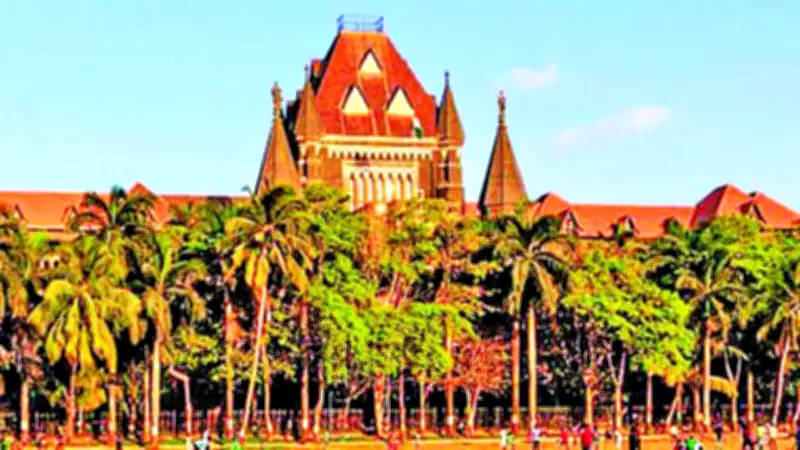
The Bombay High Court recently ruled that a nine-year delay in invoking the Maharashtra Control of Organised Crime Act (MCOCA) in an alleged extortion case does not automatically warrant quashing of criminal proceedings if the delay is reasonably explained. The court dismissed a quashing petition filed in 2024 by two accused individuals challenging the invocation of MCOCA in 2022.
Case Background
The bench of Justices A S Gadkari and R R Bhonsale observed that there was a prima facie case against the duo, Rajan Sujanani (75) and Kishore Vatnani (63). The delay in applying MCOCA was attributed to fear and intimidation caused by gangster Ravi Pujari, who allegedly made a threat call on September 3, 2013, to a business owner. The FIR was originally filed by Juhu police over a dispute concerning land ownership and development rights in Powai among builders. Call transcripts indicated that the threat call was made at the behest of the accused duo, according to the court.
Arguments and Observations
Senior counsel Amit Desai, representing Sujanani and Vatnani, argued that the case was essentially a civil property dispute being given a criminal color. However, the High Court stated that civil disputes do not preclude criminal prosecution if criminal ingredients are present. Desai also contended that the prior sanction required under MCOCA for prosecution was flawed because it did not consider a closure report filed in November 2015. The bench clarified that the validity of prior sanction under MCOCA can be challenged during trial, as the High Court's role at the quashing stage is limited to examining whether a prima facie case exists, not conducting a mini trial.

Third Accused Exonerated
On June 9, the court ruled in favor of a third accused, Mangesh Sawant (64), who was implicated on mere suspicion. The court quashed the MCOCA case against Sawant, noting that the alleged extortion call transcripts did not mention his name, thus failing to establish any case against him. Sawant, represented by advocate Mutahhar Khan, had petitioned the court in 2023.
Prosecution's Stand
Additional Public Prosecutor Ashish Satpute, opposing both petitions, informed the court that the business owner had filed a protest petition against the closure report in 2017. Pujari was extradited to India from Dakar, Senegal, in February 2020, and the Esplanade court allowed the protest petition in December 2021. Subsequently, witness statements were recorded alleging organized crime, and prior approval for MCOCA was granted.
Court's Satisfaction with Delay Explanation
The High Court expressed satisfaction with the explanation for the delay in invoking MCOCA. It noted that witnesses, citing fear of Pujari, never provided details before his arrest and only found the "courage" to do so after his arrest. The court described the explanation as "reasonable, plausible and reflects the conduct of a common and ordinary person."
The court further observed that the prior approval for MCOCA, dated September 12, 2022, identified Pujari as the leader of an organized crime syndicate. Over the preceding ten years, more than one chargesheet for offenses attracting imprisonment of more than three years had been filed against him, meeting the requirement of MCOCA, which mandates three such prior cases against an accused.