Bombay High Court Delivers Final Verdict in Decade-Old Murder Case
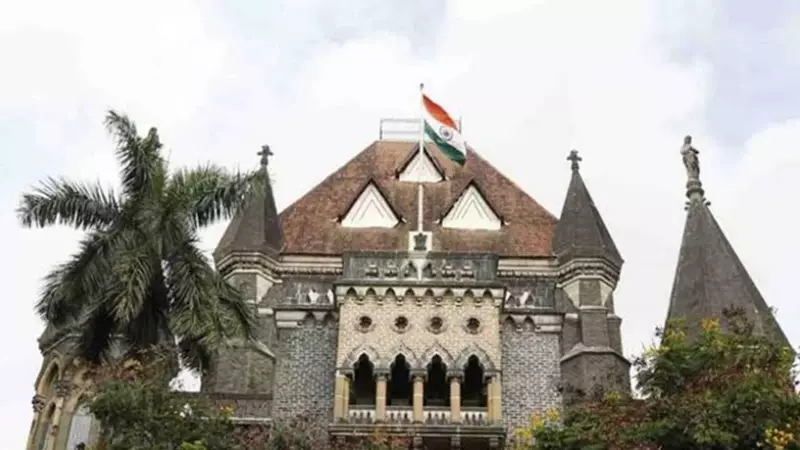
The Bombay High Court has firmly upheld the life imprisonment sentence awarded to security guard Sajjad Ahmed Abdul Aziz Mughal, commonly known as Sajjad Pathan, for the brutal 2012 murder of 25-year-old corporate lawyer Pallavi Purkayastha. In a significant ruling delivered on Monday, the court also clarified that the convict will not be eligible for parole or furlough during his lifetime imprisonment.
The bench comprising Justices Ajey S Gadkari and Neela K Gokhale simultaneously dismissed petitions filed by both the Maharashtra government and Pallavi's father, retired IAS officer Atanu Purkayastha, that sought enhancement of the sentence to death penalty. The court found the life imprisonment term appropriate while taking a strict stance against any early release possibilities.
The Gruesome Crime and Investigation
The case dates back to August 8, 2012, when Pathan, working as a security guard at the Wadala residential complex where Pallavi lived, executed a calculated plan to enter her apartment. Investigations revealed that Pathan deliberately cut off the power supply to Pallavi's flat, forcing her to call electricians for repairs. This strategic move allowed him access to her residence under the guise of addressing the electrical issue.
Two days later, on August 10, 2012, Mumbai Police apprehended Pathan at Mumbai Central station just as he was about to board a train to Surat, from where he planned to escape to his native Jammu and Kashmir. The timely arrest prevented what could have been a perfect escape from the city.
In July 2014, after extensive trial proceedings, a sessions court convicted Pathan under multiple sections of the Indian Penal Code including murder, assault with intent to outrage a woman's modesty, and house-trespass to commit an offence punishable with death. The conviction set the stage for the prolonged legal battle that followed in the higher courts.
The Great Escape and 19-Month Manhunt
In an unexpected turn of events in January 2016, Pathan was granted one month's parole to visit his ailing mother, but he never returned to prison. What followed was an intensive 19-month manhunt by Mumbai Police that spanned multiple states and involved sophisticated investigative techniques.
The breakthrough came when police tracked a Facebook post made by Pathan with his brother, which was linked to his old mobile number. This digital footprint revealed his location near Uri in Jammu and Kashmir, dangerously close to the Line of Control. Pathan had cleverly moved to his village Salamabad, adjacent to the Pakistan border, where he altered his appearance and worked as a labourer to avoid detection.
When poor wages forced him to move again, he returned to Mumbai working as a security guard at an under-construction building. Alerted by one of his friends, police began close surveillance but delayed immediate arrest as Pathan had gained local sympathy by claiming false implication. The police team eventually devised an elaborate plan, disguising themselves as engineers and luring him to the Kargil-Sonmarg area for work, where he was finally apprehended on October 10, 2017.
Legal Battles and Court Observations
The High Court verdict, authored by Justice Gokhale in a comprehensive 79-page judgment, addressed various contentions from both sides. Advocate Yug Mohit Chaudhry, representing Pathan, argued that the case relied purely on circumstantial evidence and highlighted the absence of fingerprints and non-functional CCTV cameras in the upmarket society.
Special Public Prosecutor Manoj Mohite effectively countered these arguments by presenting compelling DNA evidence that connected Pathan to the crime scene. The forensic analysis revealed Pathan's DNA on hair found at the murder site, while the murder weapon and other recovered items contained Pallavi's DNA.
The court established that Pathan was the last person seen outside Pallavi's flat with clear intent to enter, and noted his suspicious disappearance immediately after the murder. The bench observed that there was a complete chain of circumstances proving his guilt beyond reasonable doubt, and rejected the defense's claims about police motives and evidence collection.
Stringent Sentencing and Future Implications
In its final ruling, the High Court took particular note of Pathan's conduct during his parole period, specifically highlighting that he absconded and was returned to prison after one-and-a-half years from near the Pakistan border. This history of escape and evasion played a crucial role in the court's decision to deny any future parole or furlough opportunities.
The court sentenced Pathan to imprisonment till the end of his natural life, making it clear that he would serve his full term without any premature release possibilities. This landmark judgment sets a significant precedent in cases where convicts have demonstrated escape tendencies and poses important questions about parole policies in serious criminal cases.
The verdict brings closure to a legal battle that lasted nearly ten years since the appeals were first filed, providing some measure of justice to Pallavi Purkayastha's family while reinforcing the judiciary's commitment to ensuring that serious crimes receive appropriate punishment.