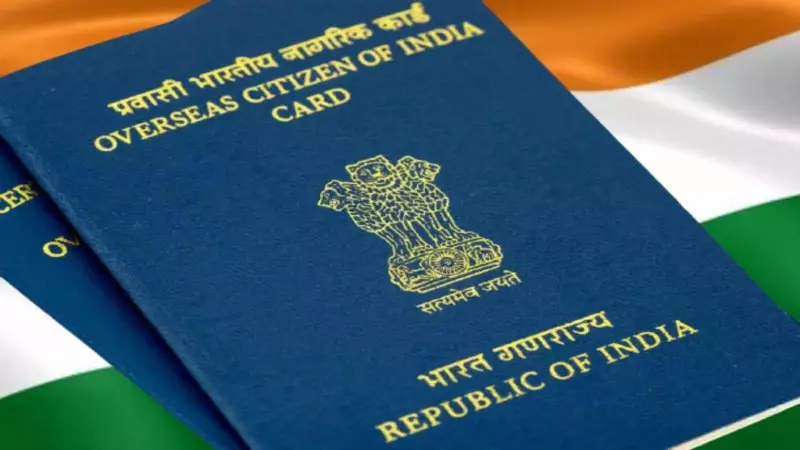
Bombay High Court Provides Relief to Portuguese Citizens in OCI Card Case
In a significant development, the Bombay High Court has granted a fresh opportunity to a mother and her son, who hold Portuguese citizenship, to apply for an Overseas Citizen of India (OCI) card and receive a proper hearing from the Foreigners Regional Registration Office (FRRO) in Mumbai. This decision comes after their initial applications were rejected by the central government due to insufficient documentation regarding their family's residency history in Goa.
Background of the Case and Initial Rejection
The mother approached the High Court following the rejection of their OCI card applications. The central government had denied their requests because she could not provide proof that her father, born in Karachi in 1952 when Goa was under Portuguese rule, had returned to Goa and resided there until the region's liberation. This documentation was crucial for establishing their eligibility under OCI regulations, which often require evidence of ancestral ties to India.
Advocate Dhaval Zaveri, representing the mother and son, argued before the court that the duo was prepared to submit the necessary documents to prove their father's residency. However, they were not given a hearing by the FRRO, and their application was rejected without any opportunity to present their case. This lack of procedural fairness prompted the legal challenge, highlighting concerns about transparency in the OCI application process.

Court's Directive for a Fair Hearing
A division bench comprising Justices Valmiki Menezes and Amit S Jamsandekar issued a clear directive to address this issue. The court ordered that upon receiving intimation, the FRRO must issue a notice to the petitioners, requiring them to appear for a personal hearing at its office in Mumbai. During this hearing, they are to submit all relevant documents to substantiate their claims regarding the contentious residency issue.
The bench emphasized that the FRRO officer should then make a decision, preferably within three weeks after the hearing. Importantly, the court clarified that it expressed no opinion on the merits of the case, leaving the FRRO officer free to evaluate the documents and reach an independent conclusion based on the evidence presented.
Implications for OCI Applicants and Procedural Justice
This ruling underscores the importance of due process in administrative decisions, particularly for individuals seeking OCI cards, which grant certain rights and privileges to foreign nationals of Indian origin. By mandating a hearing, the court ensures that applicants have a fair chance to present their documentation and arguments, potentially reducing arbitrary rejections.
The case also sheds light on the complexities faced by those with historical ties to regions like Goa, which had a unique colonial past under Portuguese rule. Such scenarios often require careful examination of residency proofs and ancestral connections, making procedural fairness all the more critical in the OCI application framework.
As the mother and son prepare for their hearing, this decision sets a precedent for similar cases, reinforcing the need for transparent and equitable processes in immigration and citizenship matters. It serves as a reminder that legal recourse can provide relief when administrative actions lack proper consideration or adherence to procedural norms.