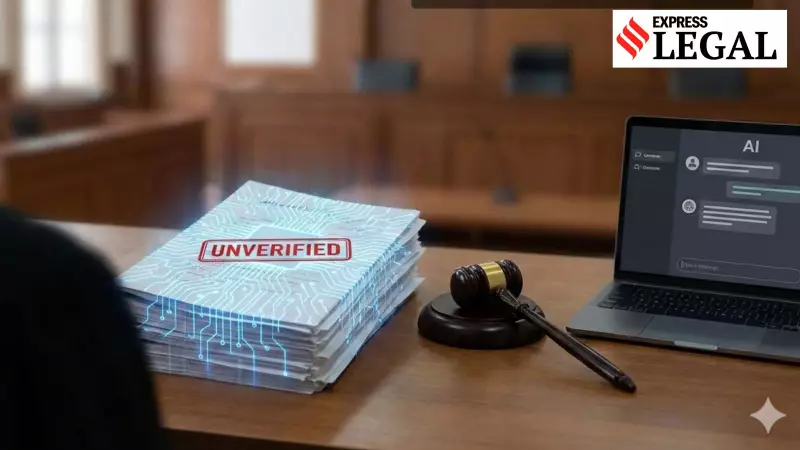
The Bombay High Court has strongly criticized a litigant for submitting written arguments generated by artificial intelligence without proper verification. The court found that these submissions included references to non-existent case laws and irrelevant material.
Court Imposes Heavy Costs for Wasting Judicial Time
Justice MM Sathaye of the Bombay High Court expressed strong disapproval of the practice of "dumping documents" on the court without verification. The court imposed costs of Rs 50,000 on the respondent for this conduct, noting that precious judicial time had been wasted not once but three times during the proceedings.
"This practice of dumping documents or submissions on the Court and making the Court go through irrelevant or non-existing material must be deprecated and nipped in the bud," the court stated in its order.

How the Court Detected AI-Generated Content
The court identified several telltale signs that indicated the submissions were prepared using AI tools like ChatGPT. These included distinctive formatting features such as green-box tick marks, bullet point marks, and repetitive submissions that lacked the nuance of human-drafted legal arguments.
The case involved a film director and producer challenging an order that had quashed an eviction order under the Maharashtra Rent Control Act, 1999. The High Court ultimately set aside the impugned ruling and confirmed the original eviction order.
Court's Warning to Advocates Using AI Tools
While acknowledging that AI tools can be helpful for legal research, the court emphasized the great responsibility that falls on parties and advocates who use such technology. The order made it clear that verification remains essential even when using advanced tools.
"If an AI tool is used in aid of research, it is welcome; however, there is great responsibility upon the party, even an advocate using such tools, to cross verify the references," the court stated. The order further stressed the need to ensure that "material generated by the machine or computer is really relevant, genuine and in existence."
Serious Consequences for Professional Misconduct
The court issued a stern warning that if any advocate is found engaging in such practices of submitting unverified AI-generated content, the matter would be referred to the Bar Council for appropriate disciplinary action. This underscores the court's commitment to maintaining professional standards in legal practice.
The case centered on a dispute between a licensor and licensee regarding a flat in Mumbai. The petitioner owned the suit flat, while the respondent was an incorporated company represented by its director. The original agreement was for 22 months, but alleged breaches led to termination and subsequent legal proceedings.
Key Legal Findings in the Case
The court made several important observations about the legal aspects of the case:
- The Revisional Authority had improperly considered a film production contract that was beyond the scope of its jurisdiction under Section 44 of the Maharashtra Rent Control Act
- The respondent's contentions in the written statement lacked supporting evidence from witnesses who entered the witness box
- The court confirmed that the leave and license agreement was granted strictly for residential use only
This ruling serves as an important reminder about the ethical use of technology in legal proceedings. While courts recognize the potential benefits of AI tools for research and drafting, they expect legal professionals to exercise due diligence and verify all submitted materials thoroughly.
The Bombay High Court's strong stance highlights the judiciary's concern about maintaining the integrity of legal processes in an era of rapidly advancing technology. Legal professionals must balance efficiency gains from AI tools with their fundamental responsibility to ensure accuracy and relevance in court submissions.