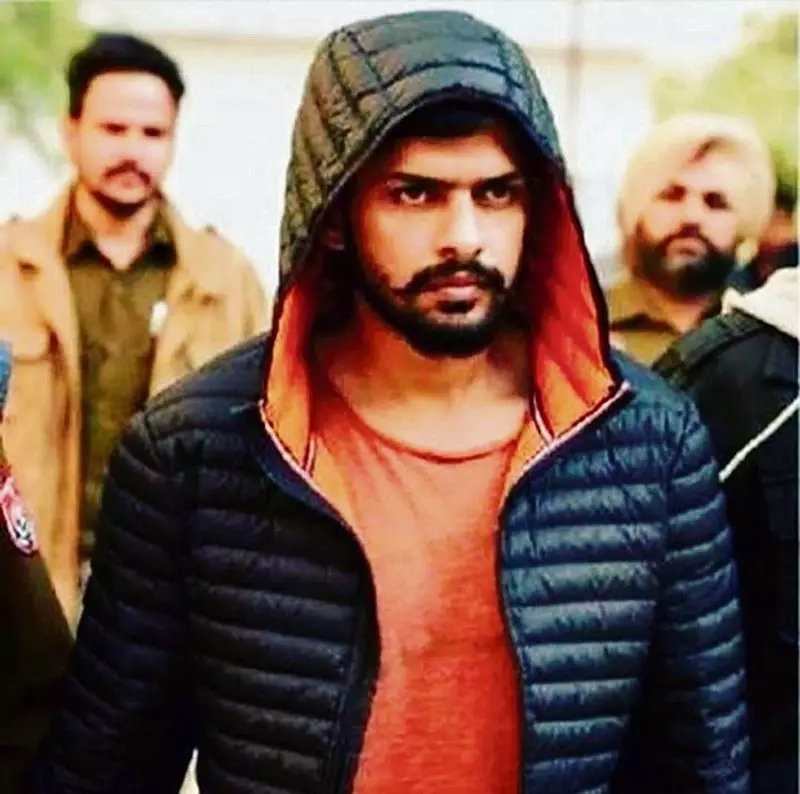
A significant development in the crackdown on organized crime has unfolded with the repatriation and subsequent arrest of a key associate of the notorious Lawrence Bishnoi gang. The individual, who was brought back from the United States, was taken into custody immediately upon his arrival at the Indira Gandhi International (IGI) Airport in New Delhi.
International Cooperation Leads to Arrest
The arrest is the result of coordinated efforts between Indian security agencies and international authorities. The suspect, identified as a close aide to gangster Lawrence Bishnoi, was repatriated from the United States on Saturday. His journey concluded at Terminal 3 of the Delhi airport, where a team from the Haryana Police's Special Task Force (STF) was waiting to apprehend him.
This operation highlights the increasing global cooperation in tackling transnational crime networks. The individual was wanted in connection with a series of serious criminal cases registered within India. Authorities had been tracking his movements and legal status abroad for a considerable period before successfully facilitating his return to face justice.
Charges and Criminal Background
The arrested individual is not a minor player. He is alleged to be a key member of the Lawrence Bishnoi syndicate, a gang involved in a wide spectrum of illegal activities across North India, particularly in Punjab, Haryana, and Delhi. The specific charges against him are grave and include serious offences under the Indian Penal Code (IPC).
While the exact details of all cases are part of the ongoing investigation, such gang members are typically implicated in charges related to extortion, targeted killings, smuggling of weapons, and terror funding. The Haryana Police STF, which spearheaded the operation, has confirmed that the suspect will be thoroughly interrogated to uncover deeper links within the gang's operations and its network.
Implications for Crime Networks and Law Enforcement
This successful repatriation and arrest send a strong message to organized crime groups operating from abroad. It demonstrates that Indian law enforcement agencies are capable of pursuing criminals across international borders. The move is expected to disrupt the operational capabilities of the Bishnoi gang, which has been linked to several high-profile crimes, including the murder of popular singer Sidhu Moose Wala.
The arrest is likely to provide investigators with crucial intelligence. Police officials hope that questioning the accused will yield information about the gang's funding channels, communication methods, and future plans. This intelligence could be instrumental in preventing future crimes and apprehending other fugitive members of the syndicate who might be hiding in other countries.
Furthermore, this case sets a precedent for future extraditions and repatriations. It underscores the importance of international legal frameworks and treaties that allow for the transfer of individuals accused of serious crimes. For the residents of Haryana and Punjab, where the gang's influence is most felt, this development is a step towards greater security and the assertion of the rule of law.