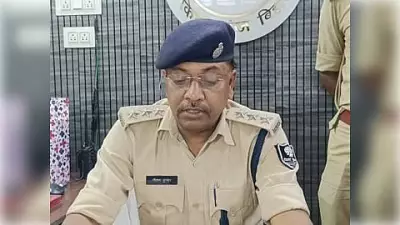
In a case highlighting the grim reality of bonded labour, a four-month investigation spanning three states culminated in the arrest of a man accused of forcing a teenage boy from Bihar into servitude at a dairy farm in Haryana. The breakthrough came after an exhaustive probe by the Bahadurgarh Government Railway Police (GRP), which pieced together the victim's harrowing journey that included walking 150 kilometres while clutching his severed arm.
A Trail of Abuse and a Desperate Escape
The minor, a resident of Kishanganj in Bihar, had left home in April last year with friends in search of work, eventually reaching Bahadurgarh in Haryana. By June, his friends decided to return home, but the boy was stranded at the Bahadurgarh Railway Station with no money for a ticket. It was here that the accused, Anil Kumar, allegedly lured him with the promise of a job at his dairy farm and a monthly salary of Rs 10,000.
Instead of payment, the boy was subjected to two months of forced labour and physical abuse. His ordeal took a horrific turn when he suffered a severe injury while cutting fodder using a machine, which led to his arm being severed. In a desperate bid for freedom, the injured teenager fled the farm. Clutching his severed arm, he walked approximately 150 km to reach Nuh, where a compassionate teacher found him, provided aid, and informed the police.

The Three-State Manhunt and a Yamuna River Clue
The Haryana State Human Rights Commission (HHRC) took suo motu cognisance of the incident in August last year after it was reported in The Indian Express. The panel later reprimanded the police in November for the slow pace of the investigation. Following this, the probe intensified under Inspector Satya Prakash, the then Bahadurgarh GRP Station House Officer.
Officers embarked on a complex mission, mapping train routes and visiting over a hundred villages across Haryana, Delhi, and Uttar Pradesh. Key locations included Sonipat, Jind, Old Delhi, Rohtak, Narela, Sahibabad, Ghaziabad, and Aligarh. The victim was taken to various railway stations, including platform 10 at New Delhi Railway Station, to jog his memory.
The crucial breakthrough came in the first week of December. While being shown around, the boy saw the Yamuna river near the ISBT in North Delhi and told police the bank looked familiar. During further questioning, he recalled that the accused had a school-going daughter and mentioned her name. Police then contacted education departments across the Delhi-NCR region near the Yamuna to find a girl with that name, but this approach failed.
Undeterred, investigators spoke to numerous villagers and village heads along the Yamuna. Finally, in Motipur village, Greater Noida, they apprehended Anil Kumar on December 30. The accused did not resist and reportedly confessed to keeping the boy illegally, admitting he had "made a mistake." Police said Anil Kumar had thrown the severed part of the boy's arm into the Yamuna. He was produced in court the next day and sent to Jhajjar jail for two weeks of judicial custody.
Justice Sought and a Long Road to Recovery
The investigation revealed the accused had forcibly taken the injured boy to Badauli village in Palwal after the accident, from where the teen began his long walk to Nuh. The boy positively identified Anil Kumar from photographs sent by the police. Inspector Satya Prakash, who was transferred to the Crime Branch soon after the FIR was lodged, had personally urged the HHRC to let him continue the probe, often using his own car and money for fuel and food during the investigation.
This case underscores the persistent challenge of bonded labour and the extreme vulnerabilities of migrant children. It also highlights the role of vigilant citizens, like the teacher in Nuh, and persistent police work across state borders to deliver justice. The teen, who has since returned to his family in Bihar, faces a long physical and emotional recovery from his traumatic experience.