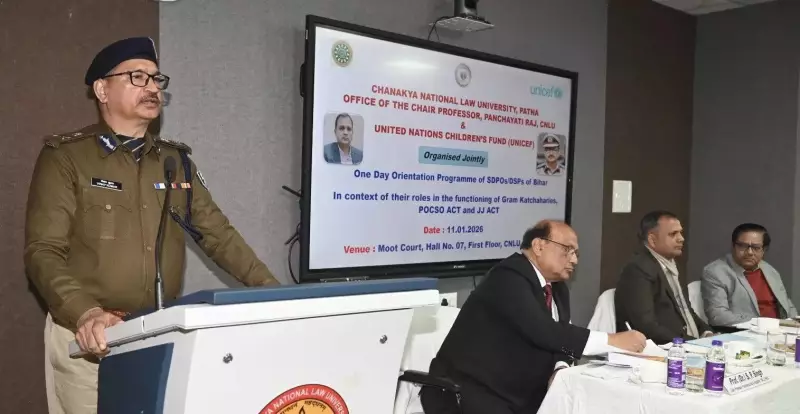
In a significant move to improve the handling of cases involving minors, Bihar's Director General of Police (DGP) Vinay Kumar issued a clear directive to the state's deputy superintendents of police (DSPs). Speaking on Sunday, the police chief emphasized the need for effective supervision, care, and compassion when dealing with juvenile offences.
Training Focuses on Legal Framework and Community Role
The DGP's remarks came during a day-long training program focused on the police's role in the functioning of Gram Katchahris. The session was organized by Chanakya National Law University (CNLU) in collaboration with UNICEF. Kumar called for enhanced coordination between the police and village-level councils (Gram Katchahris) to efficiently resolve petty disputes that involve minors.
Over 65 DSPs participated in this crucial workshop. The curriculum included detailed discussions on two key pieces of legislation: the Juvenile Justice (Care and Protection of Children) Act, 2015, and the Protection of Children from Sexual Offences (POCSO) Act, 2012.
Experts Highlight Gram Katchahri's Crucial Function
A panel of distinguished experts led the orientation for the police officers. The panel included Manoj Kumar, Secretary of the State Panchayati Raj Department; BB Sarkar, Child Protection Specialist from UNICEF; SP Singh, Chair Professor at CNLU; and Om Prakash, a retired district judge.
All resource persons unanimously stressed a central theme: Gram Katchahris can play a pivotal role in resolving disputes involving children. They explained that with the effective implementation of relevant acts, these local bodies can serve as a vital first line of intervention, ensuring quicker and more community-centric resolutions for minor issues.
Interactive Session Addresses Technical Queries
The training was not a one-way lecture. The attending deputy superintendents of police actively engaged with the domain experts, asking various technical questions to clarify their doubts about the intricacies of both the Juvenile Justice Act and the POCSO Act. This interactive segment ensured the officers left with a clearer, practical understanding of their legal responsibilities.
The program concluded with a vote of thanks proposed by Satyam Bhardwaj. This initiative marks a concerted effort by the Bihar police, academia, and international organizations to build a more sensitive and legally sound approach to juvenile justice in the state.