Bhopal Bomb Threats: Four Key Institutions Targeted in Hoax Email Scare
In a tense morning for Bhopal, four critical institutions received alarming bomb threats via email in the early hours of Monday. The targeted locations included a university in Nishatpura, the All India Institute of Medical Sciences (AIIMS) in Bag Sewania, the General Post Office (GPO) in Royal Market under Kotwali, and the Regional Passport Office. The threats, which police later confirmed as a hoax, triggered immediate security responses and widespread evacuations across the city.
Details of the Threatening Email
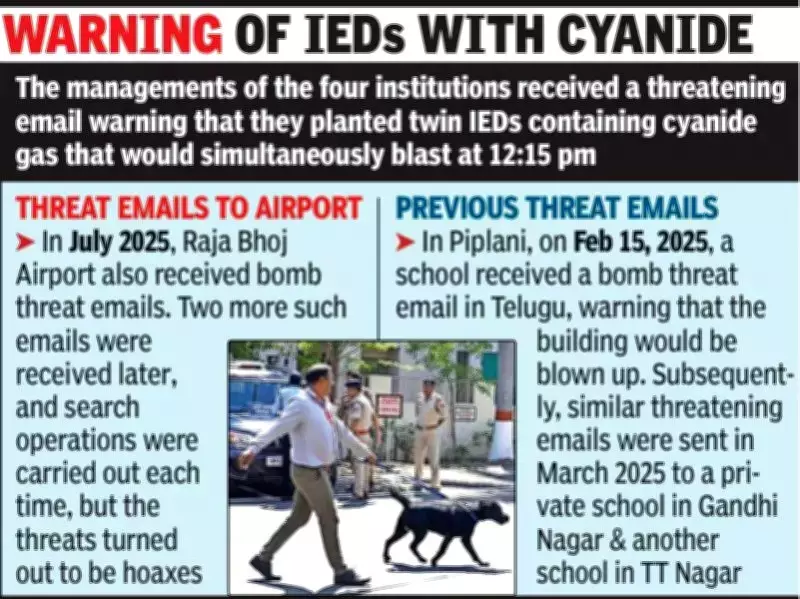
The managements of all four institutions received identical threatening emails warning that twin improvised explosive devices (IEDs) containing cyanide gas had been planted on their premises. The email ominously stated that these devices were set to detonate simultaneously at 12:15 pm. Authorities were instructed to evacuate all personnel and visitors by 11:00 am to avoid casualties.
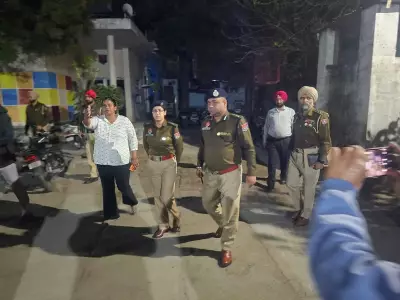
Panic quickly spread through the campuses as the threats were reported. Police teams were swiftly deployed to each location, with Station House Officers (SHOs) from Nishatpura, Bag Sewania, Kotwali, and MP Nagar rushing to the scenes under their respective jurisdictions. The university campus, the academic block and medical college at AIIMS, the GPO in Royal Market, and the Regional Passport Office were all evacuated as a precautionary measure. Entry of outsiders was completely restricted to ensure security.
Intensive Search Operations Conducted
Between 11:00 am and 3:00 pm, comprehensive search operations were carried out at all four locations. The Bomb Detection and Disposal Squad (BDDS) and dog squads were mobilized to sweep the areas thoroughly. Despite the grave warnings, no explosive devices were found during the searches. Police later confirmed that the threats were false, with preliminary investigations indicating the emails were part of a coordinated hoax.
Recurring Threat and Investigation Efforts
Notably, this incident marked the second time in just 15 days that the university in Nishatpura was targeted. A similar threatening email was received earlier on February 19, raising concerns about a pattern of harassment. A senior police officer revealed that an investigation has been launched based on the email ID and IP address used in the threats. The Cyber-Crime Branch has been actively involved in tracing the sender, leveraging digital forensics to uncover the origin of the emails.
Police Commissioner Sanjay Kumar confirmed the receipt of the threat emails, noting that their identical content strongly suggests they were sent by the same individual or group. The investigation is ongoing, with efforts focused on tracking the source of the emails and determining the motive behind the hoax. Preliminary findings have also indicated that similar emails were sent to institutions across India, hinting at a broader, coordinated campaign of disruption.
Broader Implications and Security Measures
The incident has highlighted vulnerabilities in digital security and the potential for hoaxes to cause significant public disruption. Police are working closely with cyber experts to enhance monitoring and response protocols for such threats. Authorities have urged institutions to remain vigilant and report any suspicious communications immediately to prevent unnecessary panic and ensure public safety.
As the probe continues, the focus remains on identifying and apprehending those responsible for the hoax, with the aim of preventing future incidents and maintaining peace in the community.