Bengaluru Realtor Murder Case Takes New Turn
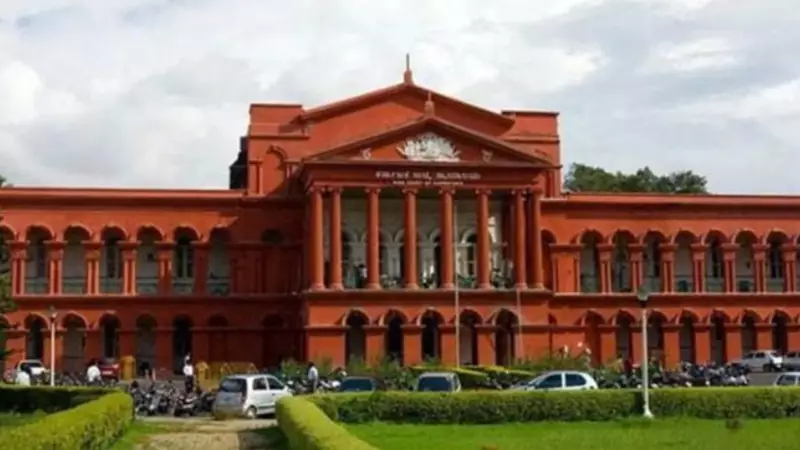
The Karnataka High Court delivered a significant ruling on Friday, rejecting petitions filed by five individuals accused in the high-profile murder of Bengaluru real estate operative V G Shivaprakash, popularly known as Bikla Shiva. The court upheld the special court's decision to extend their judicial custody under the stringent Karnataka Control of Organised Crime Act (KCOCA).
Legal Battles and Custody Extensions
In a rapid legal development, soon after the High Court dismissed the challenge against the previous custody extension, a special KCOCA court granted the Criminal Investigation Department (CID) an additional 30-day custody of the accused persons. This follows the earlier 45-day extension that concluded on November 27, which the accused had contested in the higher court.
The five accused—Kiran K, Madan R, Vimal Raj, Pradeep K, and V Samuel—had approached the High Court challenging the special court's October 17 order that permitted the 45-day custody extension. Their legal representatives argued that the extension was improperly granted after the completion of the standard 90-day judicial custody period.
Advocates for the accused maintained that both the public prosecutor and investigating officer were required to submit separate reports to the special court seeking custody extension under KCOCA provisions. They emphasized that only the prosecutor had filed the request, making the extension legally untenable.
Prosecution's Counter-Arguments
Special Public Prosecutor B N Jagadeesh presented compelling arguments defending the custody extension. He clarified that the prosecutor's report to the court inherently considered the investigating officer's input, making separate filings unnecessary under KCOCA regulations.
"The special court in its October 17 order extending custody by 45 days under KCOCA had referenced the prosecutor's report given to the court, which indicated that the court had not extended custody on assumption but after application of mind," Jagadeesh stated during proceedings.
The prosecution highlighted that the murder originated from an ongoing real estate dispute between the involved parties. They emphasized the necessity of confronting the accused with certain documents and noted that the fifth accused, BJP MLA Byrathi Basavaraj, had secured interim protection from the High Court.
Case Background and Developments
The case revolves around the July 15 daylight murder of 44-year-old Bikla Shiva, who was attacked by helmet-wearing assailants on a street in east Bengaluru. Police investigations reveal the killing stemmed from a property dispute involving associates of BJP KR Pura MLA Byrathi Basavaraj.
In a surprising turn of events, five individuals surrendered to police on July 16, claiming involvement in the murder allegedly over a local dispute. The BJP MLA was named as the fifth accused in the FIR, while his close associate Jagadish Padmanabha alias Jaga was identified as the primary accused alongside his gang members.
Jaga's international flight following the murder led to an Interpol-managed capture in Jakarta on August 26, facilitated by a blue corner notice issued at the Karnataka CID's request.
The police investigation uncovered that the murder conspiracy began in February 2025 when a property claimant approached accused Kiran K, complaining about Bikla Shiva illegally constructing compound walls on four disputed sites. The situation escalated through multiple confrontations between the Jaga and Bikla Shiva gangs vying for regional dominance.
The special court had previously, on September 24, rejected bail applications from some of the twenty accused while validating the CID's decision to invoke KCOCA—a move currently being challenged in the High Court by MLA Byrathi Basavaraj.
The High Court also dismissed the accused persons' pleas for default bail based on the completion of 90 days in custody, mirroring the special court's earlier stance on the matter.
KCOCA's implementation in this case proves significant due to its rigorous provisions, including extended police custody durations, stricter bail conditions, evidentiary allowances for phone intercepts and police confessions, and an expanded 180-day period for filing chargesheets.