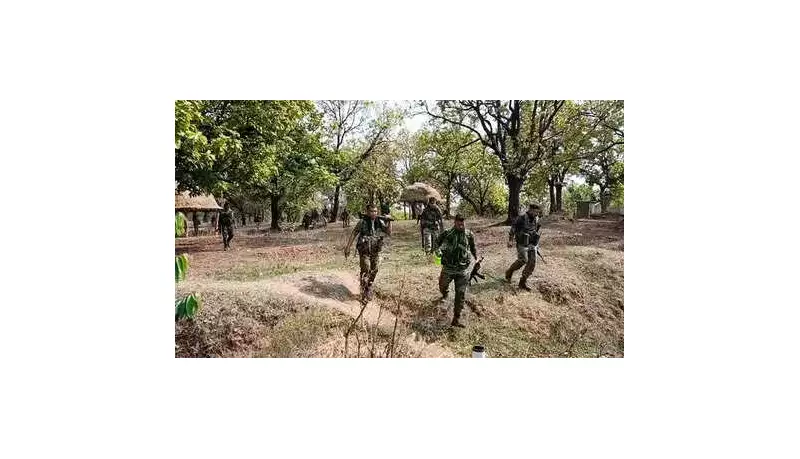
The year 2025 marked a historic and decisive turning point in the four-decade-long battle against Left-Wing Extremism in Chhattisgarh's Bastar region. According to the annual report by Bastar police, the region witnessed an unprecedented collapse of Maoist operational space, characterized by a massive surge in surrenders, a high number of neutralizations, and record-breaking seizures of weapons and explosives.
Unprecedented Numbers Signal a Strategic Shift
The data from the Bastar police action & outcome report for 2025 paints a picture of significant pressure on Maoist networks. A staggering 1,562 Maoists renounced violence and surrendered during the year, which is nearly double the 792 surrenders recorded in 2024. Parallelly, 256 Maoist fatalities were reported, alongside 884 arrests by security forces.
Perhaps the most telling indicators of the Maoists' logistical breakdown were the seizures. Security forces recovered a historic high of 645 firearms, more than double the 286 weapons seized in the previous year. The haul included rifles, light machine guns (LMGs), carbines, and rocket launchers. Even more dramatically, the recovery of 875 Improvised Explosive Devices (IEDs) represented a nearly three-fold increase from the 308 IEDs found in 2024.

The Twin Strategy: Security Push and Rehabilitation Pull
Police attribute this "watershed" moment to a sustained, two-pronged strategy. On one front, 52 new forward security camps were established deep inside the interiors of Bijapur, Narayanpur, and Sukma districts, up from 30 in 2024. These camps are not just military outposts; they have been developed as integrated development centres, bringing roads, electricity, healthcare, banking, and schooling to villages that were once completely cut off.
On the other front, a vigorous rehabilitation campaign, offering legal support and benefits, made surrender an increasingly attractive option for cadres. Bastar range Inspector General of Police P Sundarraj noted that the huge IED recoveries reflect a "collapse of Maoist supply lines and reduced access to explosives." The number of armed encounters actually fell to 99 in 2025 from 123 in 2024, suggesting more targeted, intelligence-based operations.
Decapitation of Maoist Leadership
The year 2025 dealt severe blows to the Maoist command structure across Bastar and adjoining border districts. The police report lists 16 key Maoist leaders who were eliminated, ranging from Central Committee Members (CCMs) to commanders of the Dandakaranya Special Zonal Committee (DKSZC). Among those neutralized were senior figures like General Secretary Basvaraju, CCMs Narsimha and Chala, Ram Chandra Reddy, and DKSZCMs Sudhakar, Jagdeesh, and Renuka. This loss of senior leadership has significantly weakened the organizational cohesion of the insurgent group.
In conclusion, the convergence of expanded security infrastructure, precise intelligence operations, and an effective surrender policy has created what authorities describe as increasingly "untenable conditions" within the Maoist ranks. The events of 2025 in Bastar represent the most significant strategic setback for the Left-Wing Extremist movement in the region in over forty years.