Bangladesh Interim Government Releases Data on Minority Incidents
Bangladesh's interim government made a significant statement on Monday. The government declared that most incidents involving minority community members during 2025 were criminal in nature. Officials asserted these cases lacked communal motivations.
Government Presents Evidence-Based Analysis
The office of Chief Adviser Muhammad Yunus issued the detailed statement. Yunus later highlighted the findings in a social media post. This announcement followed recent pressure from India. Indian authorities urged Dhaka to address attacks on minorities firmly and quickly.
Government officials conducted a year-long review of police records. They examined data from January through December 2025. The review covered 645 documented incidents involving minority communities nationwide. Authorities verified information through FIRs, general diaries, charge sheets, and investigation updates.
"While every incident is a matter of concern, the data presents a clear and evidence-based picture," the statement emphasized. "The overwhelming majority of cases were criminal in nature rather than communal."
Breakdown of Communal and Criminal Cases
According to the government's analysis, only 71 incidents displayed communal elements. These included specific categories:
- 38 cases of temple vandalism
- 8 incidents of arson
- 1 case each of theft and murder
- 23 other incidents including threats to break idols, provocative social media posts, and damage to worship pavilions
Police registered cases in 50 of these communal incidents. Authorities made arrests in an equal number. Preventive or investigative measures addressed the remaining cases.
The government classified the remaining 574 incidents as criminal or social disputes unrelated to religion. These included:
- 51 neighborhood disputes
- 23 land-related conflicts
- 106 theft cases
- 26 incidents stemming from prior personal enmity
- 58 rape cases
- 172 cases of unnatural death
Police registered 390 cases in this criminal category. They filed 154 unnatural death reports. Authorities made 498 arrests. Additional measures addressed 30 incidents.
Government Emphasizes Accurate Classification
The statement stressed the importance of proper incident classification. Officials argued accurate categorization counters misinformation. It also enables effective law enforcement.
"While all crimes are serious and demand accountability, the data demonstrates that most incidents involving minority victims were not driven by communal hostility," the government explained. "Broader criminal and social factors affect citizens across religious and ethnic lines."
Minority Council Questions Government Assessment
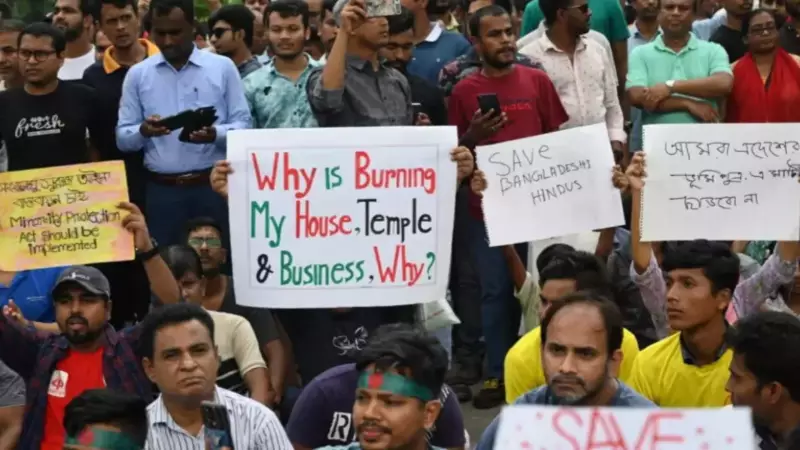
The Bangladesh Hindu Buddhist Christian Unity Council expressed skepticism about the government's assessment. BHBCUC leader Kajal Debnath raised serious questions.
"If the government thinks these are not communal incidents, the question then is whether anyone can take the law into their own hands," Debnath stated. He warned such statements might embolden criminals. They could create a dangerous sense of impunity.
India Continues to Voice Concerns
India has repeatedly raised concerns about attacks on minorities in Bangladesh. Hindu communities have faced particular scrutiny. On January 9, External Affairs Ministry spokesperson Randhir Jaiswal addressed the issue directly.
"We continue to witness a disturbing pattern of recurring attacks on minorities as well as their homes and businesses by extremists," Jaiswal said. He emphasized such incidents require "swift and firm" handling.
Strained Relations Between Neighbors
Relations between India and Bangladesh remain tense. The interim government headed by Yunus assumed power following the collapse of Sheikh Hasina's government in August 2024. New Delhi continues to flag concerns about minority safety in its neighboring country.
The data release represents the government's attempt to provide transparency. However, minority groups and international observers continue monitoring the situation closely.