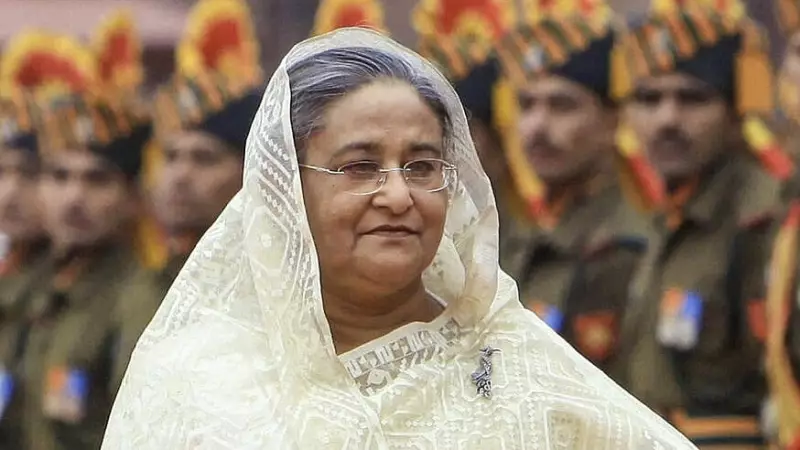
A court in Bangladesh has delivered a significant verdict, sentencing the country's current Prime Minister, Sheikh Hasina, to a five-year prison term. The ruling pertains to a long-standing corruption case involving the illegal acquisition of land.
Details of the Court Verdict and Case
The verdict was announced by a Dhaka court, specifically the Special Judge's Court-9 in the capital. The case centered on allegations that Sheikh Hasina, along with six other individuals, was involved in a scam related to the acquisition of a plot of land in Dhaka's upscale Gulshan area. The court found her guilty of abusing power to facilitate the illegal purchase of the land, which was intended for a charity trust named after her father, Bangabandhu Sheikh Mujibur Rahman.
The court sentenced Sheikh Hasina to five years of rigorous imprisonment. In addition to the jail term, the Prime Minister was fined Tk 50,000. Failure to pay this fine would result in an additional six months of imprisonment. The court also issued an arrest warrant against her. However, given her position and immunity, the warrant's immediate execution is a complex legal matter.
Political Context and Reactions
This legal development occurs against a backdrop of intense political rivalry in Bangladesh. The case itself is not new; it was initially filed during the period of the military-backed caretaker government in 2007, a time when Sheikh Hasina was in the opposition. Her party, the Awami League, has consistently denounced the case as politically motivated, designed to sideline her from politics.
The verdict is likely to exacerbate the already heightened political tensions in the country. With general elections historically a flashpoint, this judgment adds a new layer of complexity to Bangladesh's political landscape. Legal experts are debating the procedural aspects, including how the arrest warrant for a sitting Prime Minister will be handled under the constitution.
Implications and Next Steps
The immediate consequence of the verdict is largely symbolic, as Sheikh Hasina enjoys constitutional immunity while in office. However, it carries substantial political weight. The opposition is expected to leverage this judgment to intensify its criticism of the government. Conversely, the ruling party is likely to rally its supporters, framing the verdict as a continuation of a political witch-hunt.
The legal battle is far from over, as Sheikh Hasina's legal team is expected to appeal the verdict in a higher court. The appeal process will determine the long-term impact of this case on her political career and the governance of Bangladesh. Observers both domestically and internationally are closely watching how the situation unfolds, given its potential to influence stability in the region.
This case underscores the ongoing challenges at the intersection of law and politics in South Asia, where corruption charges are often wielded as powerful tools in political conflicts.