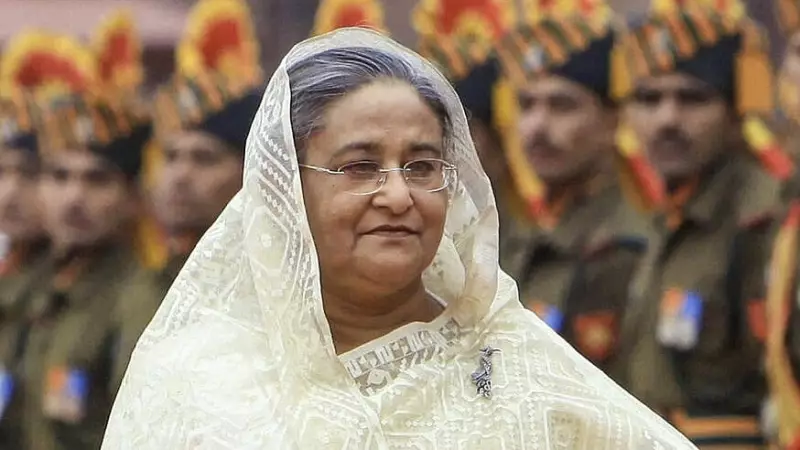
A court in Bangladesh has delivered a significant verdict, sentencing the country's Prime Minister, Sheikh Hasina, to a five-year prison term. The ruling pertains to a long-standing land acquisition corruption case.
The Court's Verdict and Charges
The judgment was pronounced by Dhaka Special Judge Court-7 Judge Morshed Al Mamun Bhuiyan. The case, officially known as the Gopalganj's Tungipara land acquisition corruption case, dates back to allegations from 1991-1992. The court found Sheikh Hasina guilty of illegally acquiring 1.90 acres of land in her ancestral home constituency of Tungipara, Gopalganj, during her first term as Prime Minister.
In addition to the prison sentence, the court imposed a fine of Taka 50 lakh (5 million). The verdict was delivered in absentia, as the Prime Minister was not present in the courtroom. The judge explicitly stated that the sentence would be effective from the moment of her arrest or surrender before the court.
Background and Political Context of the Case
This legal case has deep political roots. It was originally filed in 2007 during the tenure of the military-backed caretaker government. At that time, Sheikh Hasina was arrested and spent nearly a year in jail before being released on parole for medical treatment abroad. She eventually returned to lead her party, the Awami League, to a landslide victory in the December 2008 general elections.
The case had seen numerous delays and legal proceedings over the years. Crucially, the High Court had earlier stayed the proceedings of this specific case. However, the stay order was reportedly vacated recently, clearing the path for the Special Judge Court to proceed with the verdict. This timing is particularly sensitive given the current political climate in Bangladesh.
Immediate Reactions and Wider Implications
The verdict has sent shockwaves through Bangladesh's political landscape. Legal experts and political analysts are immediately questioning its practical implementation, given that Sheikh Hasina is the sitting head of government. The scenario presents a complex constitutional and political dilemma.
Furthermore, the judgment is likely to have significant diplomatic repercussions. Sheikh Hasina is a key figure in South Asian politics, and her government maintains important relationships with neighboring countries, including India. The development could potentially influence regional dynamics and bilateral engagements.
This ruling adds another layer of intensity to Bangladesh's already charged political environment. It remains to be seen how the government, the ruling Awami League, and the country's institutions will respond to this unprecedented judicial order against a serving Prime Minister. The coming days are expected to be critical for the nation's democracy and legal framework.