Andhra Pradesh High Court Issues Stay on Building Penalisation Scheme
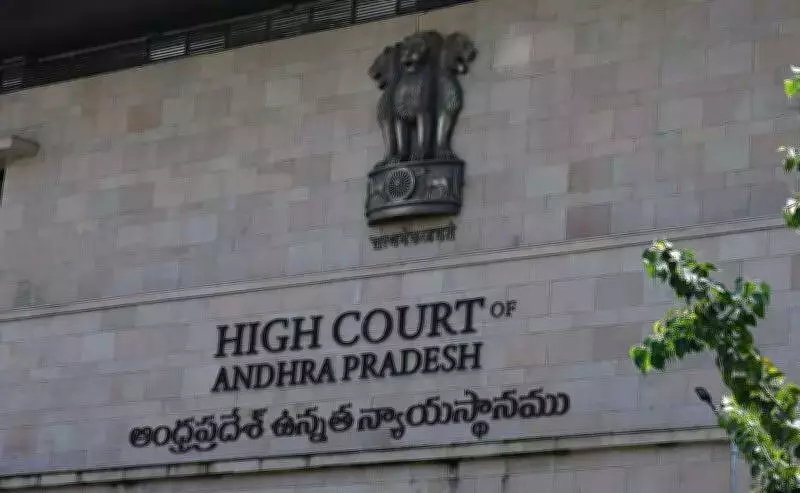
The Andhra Pradesh High Court has taken a decisive step by directing the state government to immediately halt all processing of applications submitted under the controversial Building Penalisation Scheme (BPS). This significant order was issued on Wednesday by a bench comprising Chief Justice Dhiraj Singh Thakur and Justice Challa Gunaranjan.
Legal Challenge Against GO 225
The court's intervention came in response to a Public Interest Litigation (PIL) filed by Chinnaboyina Harikrishna, a resident of Prakasam district. The petitioner challenged Government Order 225, which was issued by the Municipal Administration and Urban Development (MAUD) department. This GO formally notified the Andhra Pradesh Regulation and Penalisation of Buildings constructed unauthorisedly and in deviation of sanctioned plan rules.
The state government had amended multiple laws to extend the BPS applicability to buildings constructed until August 31, 2025. This extension formed a central point of contention in the legal proceedings.
Arguments Against the Scheme
Advocate Vivekananda Virupakasha, representing the petitioner, presented compelling arguments before the High Court bench. He asserted that GO 225 and the accompanying legislative amendments violated established judgments from both the Supreme Court and the combined High Court.
The counsel emphasized that the combined High Court had previously declared that the 2015 Building Penalisation Scheme should be the final such initiative, with no future schemes permitted. This historical context added substantial weight to the petitioner's case.
Virupakasha further referenced a recent Supreme Court observation that illegal constructions must be curtailed with "iron hands." This judicial stance against unauthorized building activities provided additional legal foundation for challenging the current penalisation scheme.
Court's Directives and Government Response
After considering arguments from both sides, the High Court issued specific directives:
- The state government must not process any applications received under the Building Penalisation Scheme until further court orders
- The government must file a detailed counter affidavit addressing the PIL's allegations
- The petitioner's counsel must submit all relevant judgments on the subject matter for the court's consideration
The counsel representing the MAUD department requested additional time to prepare a comprehensive response to the legal challenge, which the court accommodated in its proceedings.
Scale of Unauthorized Construction
According to the contested GO 225, the state government has identified a staggering 59,041 unauthorized constructions across Andhra Pradesh. This breakdown includes:
- 49,056 deviations from officially sanctioned building plans
- 9,985 additional floors constructed beyond approved limits
These statistics highlight the extensive nature of unauthorized construction activities that the Building Penalisation Scheme was designed to address through regularization processes.
The High Court's interim order represents a significant development in the ongoing legal debate surrounding building regularization policies in Andhra Pradesh. The court's reference to previous judicial pronouncements suggests a careful consideration of legal precedent in matters of urban development and construction regulation.
This case continues to unfold as both parties prepare their detailed submissions for the court's subsequent hearings. The outcome could have far-reaching implications for urban planning, construction regulation, and legal approaches to addressing unauthorized building activities across the state.