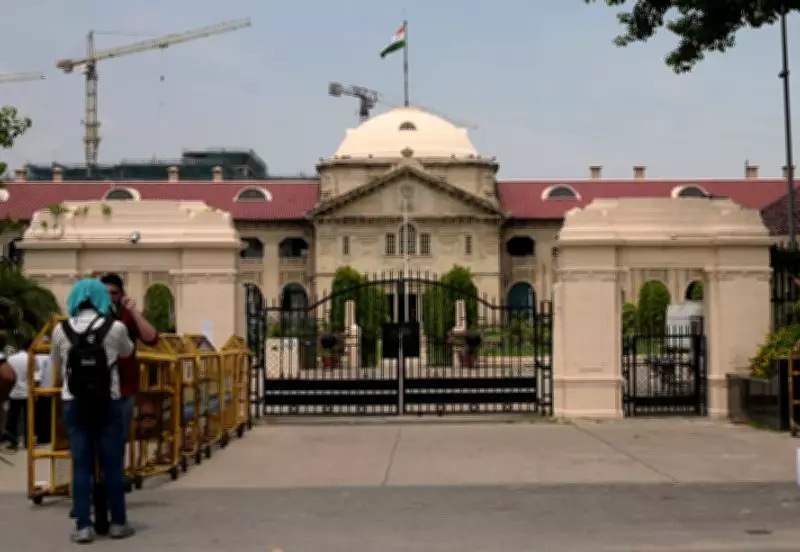
The Allahabad High Court has ruled that the Kinnar (transgender) community is not entitled to demand 'badhai' (congratulatory money) during social events such as weddings, births, and other celebrations. The court stated that seeking badhai is not a customary right and that the community cannot force individuals to pay them.
Court's Observation
Justice Vivek Kumar Birla and Justice Vikas Budhwar of the Lucknow bench made the observation while hearing a petition filed by a member of the Kinnar community. The petitioner had sought protection from harassment and demanded that the administration ensure their right to seek badhai. However, the court dismissed the petition, emphasizing that no one can be compelled to give money under the guise of tradition.
Legal Implications
The court clarified that while the Kinnar community deserves respect and equal treatment under the law, they cannot impose demands or intimidate people into paying them. The ruling highlights that the practice of seeking badhai is not protected by any law or constitutional right. The court further noted that if any individual feels threatened or coerced by members of the Kinnar community, they can approach the police for action under relevant laws.

Reactions from the Community
Members of the Kinnar community have expressed disappointment over the verdict. Some activists argue that seeking badhai is a traditional practice that helps them earn a livelihood, as many face discrimination in regular employment. However, legal experts have supported the court's decision, stating that no community has the right to demand money from others.
Broader Context
The Kinnar community in India has historically faced social ostracization and economic marginalization. While they have been granted legal recognition as a third gender by the Supreme Court in 2014, their socio-economic conditions remain poor. The practice of seeking badhai is one of the few sources of income for many transgender individuals. However, instances of coercion and harassment have led to complaints from the public.
The Allahabad High Court's ruling is expected to set a precedent for similar cases across the state. It balances the rights of the Kinnar community with the right of individuals to refuse payment without facing harassment. The court has urged the state government to implement welfare schemes for the community to provide alternative livelihood opportunities.