The Allahabad High Court has delivered a significant judgment recognizing economic abuse as a form of marital exploitation. The court dismissed a petition filed by a husband seeking expedited disposal of a maintenance case against his wife, terming the litigation 'vexatious' and 'born out of false pretences.'
Background of the Case
The petitioner and respondent were married on May 18, 2019, while both were preparing for competitive exams. Shortly after marriage, the wife secured a government job as an Additional Private Secretary at the Allahabad High Court, while the husband remained unemployed despite being a law graduate and a registered advocate. Disputes soon arose, leading to multiple litigations.
Husband's Claims
The husband filed a maintenance application under Section 144 of the Bhartiya Nagarik Suraksha Sanhita (BNSS), 2023, before the Principal Judge, Family Court, Etawah. He later approached the High Court seeking expedited proceedings, claiming he had no independent source of income and suffered from health issues due to litigation stress. His counsel argued that the wife had spoiled his career by filing false FIRs and a divorce petition, and that he had to travel long distances for court dates.

Wife's Revelation
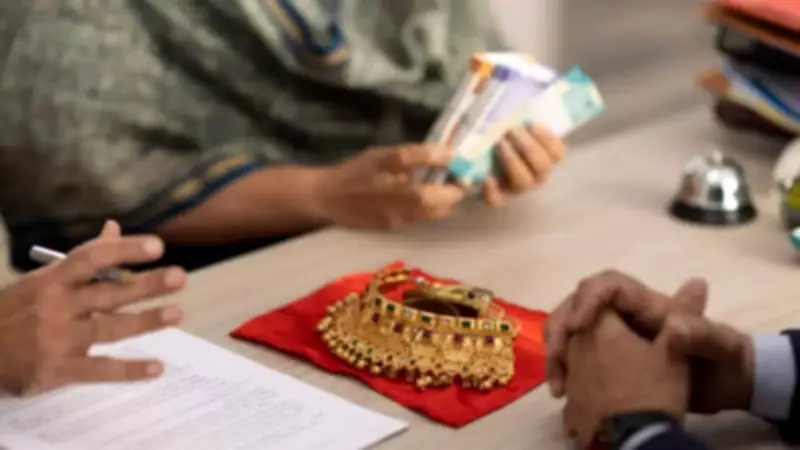
The wife's counsel presented a contrasting narrative, revealing that the husband came from a politically influential family and was a civil contractor before joining the legal profession. She alleged that he was a 'compulsive liar' who took two personal loans totaling over ₹25 lakhs from her salary account under the guise of purchasing land but spent the money on alcoholic drinks and a luxurious lifestyle. The wife was paying a monthly EMI of ₹26,020 for these loans, along with ₹5,000 per month as interim maintenance under a separate order.
Court's Findings
Justice Vinod Diwakar examined bank statements, affidavits, and Family Court records, finding that the husband had sworn false affidavits. He failed to disclose that he was already receiving ₹5,000 per month as maintenance and that the proceedings he sought to expedite had been stayed by a coordinate bench of the High Court.
The court noted that Section 144 BNSS primarily contemplates maintenance for wives, children, and parents, citing precedents to hold that the legislature did not intend to clothe the husband with the right to claim maintenance from his wife under this chapter. The court also highlighted the financial exploitation of the respondent, stating that 'economic abuse within marriage operates in insidious ways: through control over income, coercive appropriation of assets, and the gradual erosion of financial independence.'
Verdict and Compensation
The court described the husband as a 'well-built, shameless youth, who had no respect for the hard work, sincerity, and loyalty' of his wife. The petition was dismissed for lack of bona fides, and to address marital exploitation and unjust enrichment, the court ordered the husband to pay ₹15,00,000 to the wife within six weeks. If he fails to do so, the District Magistrate, Etawah, is directed to recover the amount as arrears of land revenue. The trial court is also directed to expedite divorce proceedings under Section 21-B of the Hindu Marriage Act. The court concluded that 'justice within marriage is not merely symbolic but materially enforceable.'