Decades Behind Bars End as Acquitted Tailor Finally Sees Freedom
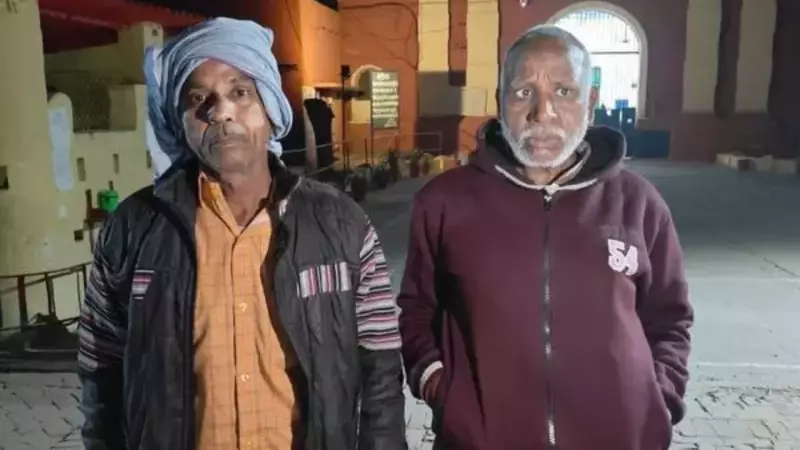
At precisely 7:15 PM on Wednesday, the imposing iron gates of Bareilly central jail slowly swung open, revealing a hesitant figure stepping into the twilight. For 54-year-old Azad Khan, this marked his first taste of liberty in nearly a quarter-century—24 long years spent incarcerated, plus an additional month following his formal acquittal by the Allahabad High Court.
A Legal Victory Ignored
The High Court had unequivocally acquitted Azad Khan, noting a critical failure in the prosecution's case: not a single witness was produced to connect him to the alleged crime. Yet, this judicial verdict did not translate into immediate freedom. The weight of those lost years was visibly etched upon his frail physique and reflected in his uneasy demeanor, a testament to the profound psychological toll of prolonged confinement.
Media Report Triggers Action
Azad's release was ultimately catalyzed by external scrutiny. A report published by The Times of India brought his continued imprisonment post-acquittal to light. Taking immediate cognizance, the Uttar Pradesh Jail Headquarters in Lucknow issued directives to the Bareilly jail authorities, mandating the swift initiation of his release process.
Demonstrating rare alacrity, the jail administration coordinated with the Mainpuri district court to secure the necessary release orders. This concerted effort effectively cut through years of entrenched procedural inertia and bureaucratic delays that had unjustly kept Azad confined long after the law had declared him innocent.
A Quiet, Overwhelming Freedom
For Azad Khan, freedom arrived not with fanfare but with quiet overwhelm. Speaking to reporters, he recounted the exact duration of his ordeal: 24 years, 8 months, and 26 days. He recalled the events that led to his imprisonment, stating that in 2001, upon learning a dacoity case had been registered against him, he voluntarily presented himself before the court. At the time of the FIR, he was living in Delhi and working as a tailor.
Prison officials noted that the prolonged incarceration, coupled with the uncertainty of legal proceedings and severe isolation, had left him physically and psychologically fragile, necessitating careful handling during his release.
Systemic Failures Exposed
This case has starkly highlighted systemic flaws within the judicial and prison administration. Yanendra Pandey, the court-appointed counsel who has handled Azad's case since 2023, emphasized the issue.
"The case has again drawn attention to the systemic failures that allow acquitted prisoners to remain behind bars due to procedural delays and poor coordination between courts and prison authorities," Pandey stated. "In Azad's case, it was only after external intervention that multiple agencies moved in tandem—from the jail headquarters to the district court—to resolve issues related to documentation, personal bonds, and pending procedural formalities."
Ensuring a Safe Transition
Mindful of Azad's fragile state—jail doctors had previously documented episodes of mental distress—authorities took special measures. They contacted his elder brother, Mastan Khan, requesting his presence in Bareilly to receive Azad. With no other immediate family available, officials deemed it safer and more humane to directly hand over the newly freed man to a family member. Mastan Khan was expected to arrive by 11 PM on Wednesday for a poignant reunion after decades of separation.
The Long Road Ahead
As dusk settled over the prison complex, Azad Khan's official release was complete. However, for a man who entered prison in his youth and emerged into middle age, the true challenge was just beginning. Freedom represents more than merely stepping outside the prison gates; it entails the daunting task of learning to live again in a world that has irrevocably moved on without him. His journey toward normalcy, supported by family and underscored by a glaring example of judicial delay, is now underway.