

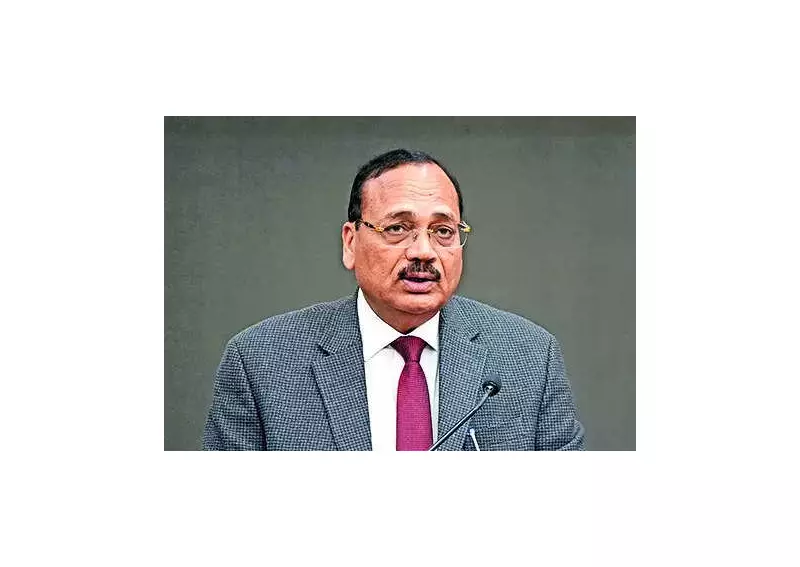
India's newly appointed Chief Justice Surya Kant has revealed that the country's judiciary is grappling with an overwhelming backlog of 5.4 crore pending cases across all levels, describing it as a manifestation of deep structural problems within the system.
Breaking Down the Massive Case Pendency
The staggering statistics show that trial courts bear the brunt of this burden with 4.8 crore pending cases, while high courts have 63.8 lakh cases awaiting resolution. The Supreme Court itself faces a backlog of more than 90,000 cases.
Justice Kant, who took oath as CJI on Monday, emphasized to Times of India that addressing this challenge requires a scientific and comprehensive approach across all judicial tiers. He stressed that the effectiveness of India's democracy depends on the robust functioning of all three levels of the judiciary.

Infrastructure Deficiencies and Government Collaboration
The Chief Justice identified acute infrastructural deficiencies as a primary cause of the growing pendency. He called for a coordinated effort between the government and judiciary to resolve these issues.
Essential measures needed include:
- Timely identification of land and resources for courts
- Equipping courts with essential facilities
- Expeditious completion of judicial infrastructure projects
Justice Kant also highlighted that emphasizing mediation and alternative dispute resolution mechanisms could significantly reduce the burden on courts in the future.
Constitutional Harmony Between Judiciary Tiers
Addressing concerns about the Supreme Court's perceived 'big brother' approach toward high courts, the CJI clarified that the relationship is one of constitutional complementarity, not competition.
He explained that high courts possess broader powers under Article 225 compared to the Supreme Court's authority under Article 32. The real strength of high courts lies in their proximity to the people and their direct engagement with regional realities and local challenges.
"A vast majority of constitutional matters - right to protection, administrative oversight, executive accountability - continues to be addressed by high courts. This is where I believe the Constitution truly lives in daily practice," Justice Kant stated.
While declining to elaborate on specific efforts regarding women's representation in judiciary and selective implementation of collegium recommendations, the Chief Justice assured that he is actively working on these issues.






