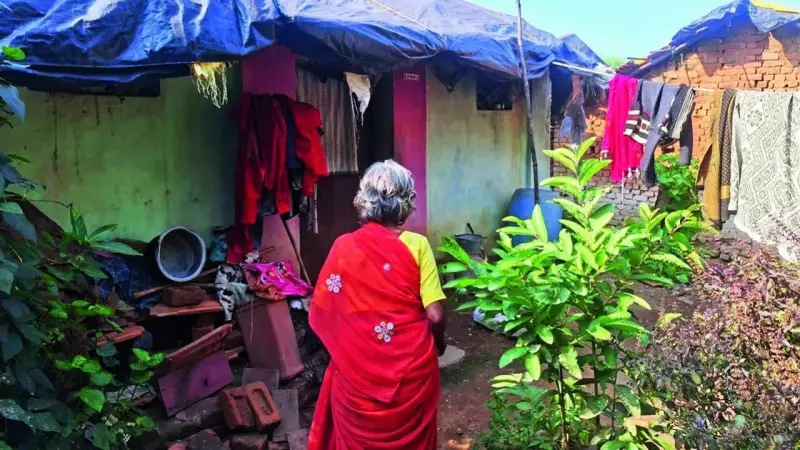
In a shocking revelation that exposed systemic failures, the woman known only as Mathura - whose 1972 rape case reshaped India's sexual assault laws - was discovered living in a collapsing hut in eastern Maharashtra, completely abandoned by the welfare systems meant to protect her.
Decades of Neglection Ends Overnight
The plight of the 72-year-old survivor came to light when a front-page report by Times of India on November 30 triggered an immediate wave of responses from across India and beyond. The report revealed that the woman, whose legal battle became a landmark in Indian judicial history, had been forgotten by the very systems that should have ensured her well-being.
Maharashtra Chief Minister Devendra Fadnavis responded immediately after the publication, assuring assistance for the elderly survivor. His response opened floodgates of support from various sectors of society.

Nationwide Support Mobilizes Quickly
The response to Mathura's situation was both swift and substantial. Bankers, private-sector workers, film producers, Bollywood personalities, and even US-based activists began reaching out, asking how they could help the survivor. Several individuals and organizations are preparing to travel to her remote village, located approximately 150 kilometers from Nagpur.
Chandrapur district authorities moved first with concrete assistance. Within hours of the report's publication, officials committed Rs 10 lakh - with Rs 5 lakh coming from the District Collector office employees' welfare fund and another Rs 5 lakh from CSR contributions by a power plant group.
The administration also cleared several essential benefits for Mathura, including monthly rations of 30kg, a home under either the Gharkul scheme or Pradhan Mantri Awas Yojana, and support through other government welfare programs.
The Case That Changed India's Rape Laws
Mathura became an emblem of systemic injustice after two policemen accused of raping her inside Desaiganj police station were acquitted by the Supreme Court in 1979. The controversial ruling in Tukaram vs State of Maharashtra ignited nationwide protests and spurred wide-ranging changes in the country's rape law in 1983.
Her case fundamentally transformed how Indian courts handled sexual assault cases, particularly regarding the burden of proof and the treatment of survivors. Despite her monumental impact on Indian jurisprudence, Mathura herself had slipped through the cracks of the system she helped reform.
The rapid mobilization of support following the TOI report demonstrates both societal conscience and the power of media in highlighting grave injustices. As assistance reaches Mathura in her remote village, her story serves as a stark reminder of the gap between legal reform and ground-level implementation of welfare measures for survivors.