Yogi Adityanath Reviews Revised Mathura Heritage City Project Draft in Noida
Chief Minister Yogi Adityanath conducted a comprehensive review of the revised Mathura Heritage City project draft on Saturday during his visit to Noida. The draft was meticulously prepared by the Yamuna Expressway Industrial Development Authority (YEIDA), and the review took place as part of a meeting chaired by the chief minister with the Braj Teerth Vikas Parishad.
Project Overview and Land Acquisition Plans
YEIDA officials presented the ambitious plan, which is valued at Rs 7,200 crore and is designed to cover an extensive area of 753 acres. The project is strategically located under the Raya Urban Centre near Vrindavan, aiming to transform the region into a major cultural, spiritual, and tourism hub deeply inspired by Lord Krishna's Braj legacy.
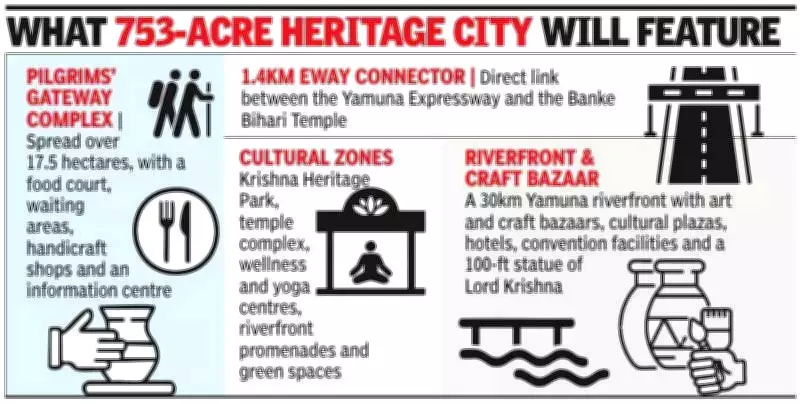
Shailendra Bhatia, the additional CEO of Yamuna Authority, provided detailed insights into the project's components. He announced that the agency will soon initiate the land acquisition process, pending the receipt of land records from the Mathura district magistrate. Bhatia emphasized the development of a pilgrims' gateway complex, which will span 17.5 hectares and include essential facilities such as a food court, waiting area, handicraft shops, and an information centre.

Infrastructure and Connectivity Enhancements
In addition to the gateway complex, the Authority plans to construct a 1.4-kilometer-long and 30-meter-wide road that will connect the Yamuna Expressway directly to the Banke Bihari Temple. This infrastructure project is expected to require nearly four hectares of land and will significantly facilitate access for pilgrims and tourists visiting the temple. The local district administration has been tasked with identifying landowners and sharing detailed land records to expedite the acquisition process.
Addressing Environmental and Financial Concerns
The review of the project draft followed significant concerns raised after parts of the proposed site were submerged during last year's monsoon season. In response, YEIDA directed its consultant to conduct a fresh flood-risk and terrain assessment to ensure the final alignment of the project is safe and sustainable.
Originally, the project was planned to be developed entirely on a public-private partnership (PPP) model. However, recent assessments revealed that YEIDA would need to bear the majority of the land acquisition costs, making private investment less viable. Consequently, the board has proposed a hybrid development model to address these financial challenges.
Revised Development Model and Key Features
Under the revised plan, YEIDA will take charge of developing residential and commercial clusters. Meanwhile, key cultural and thematic zones will be pursued through PPP partnerships. These zones include:
- Krishna Heritage Park
- Temple complex
- Wellness and yoga centres
- Riverfront areas
- Green zones
The project will also feature a 30-kilometer Yamuna riverfront development, an art and craft bazaar, cultural plazas, hotels, convention facilities, and a monumental 100-foot statue of Lord Krishna at the core of the temple complex.
Expected Impact and Benefits
The Mathura Heritage City project is envisioned to serve as a premier gateway to Braj tourism, offering a rich blend of cultural, spiritual, and eco-friendly experiences. It is expected to significantly boost regional employment opportunities and enhance infrastructure development, positioning the area as a top destination for pilgrims and tourists alike.