In a significant development for water infrastructure in northern India, the World Bank has approved comprehensive technical and financial assistance amounting to Rs 5,700 crore for Haryana under the ambitious 'Jal Sanrakshit Haryana Project'. Chief Minister Nayab Singh Saini announced this landmark decision on Saturday, emphasizing that the initiative aims to transform the state into a self-reliant entity in the critical water sector.
Phased Implementation and Core Objectives
Chairing a detailed review meeting on the program, Chief Minister Saini revealed that the substantial funds will be disbursed in carefully planned phases spanning from 2026 to 2032. The financial injection will primarily target large-scale canal restoration, expansion of micro-irrigation systems, groundwater recharge initiatives, and the promotion of sustainable agricultural practices across the state.
Comprehensive Canal Restoration Strategy
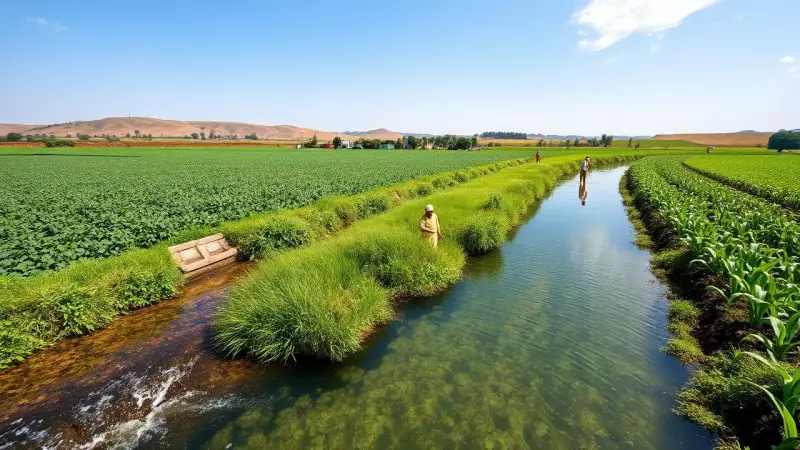
According to the official blueprint, Haryana currently has 1,570 canals that form the backbone of its irrigation network. Over the past two decades, restoration work has been completed on 892 of these canals. The remaining 678 canals are now slated for completion within the next five years through a multi-faceted funding approach.

The restoration plan includes:
- 115 canals requiring an investment of Rs 2,325 crore with direct World Bank support
- 284 canals costing Rs 2,230 crore to be funded through the state budget
- 279 canals worth Rs 2,880 crore to be financed through NABARD funding mechanisms
Minor Canal Network Enhancement
The Chief Minister further elaborated that similar restoration work is planned for the extensive network of minor canals. Under the Micro Irrigation & Command Area Development Authority, Haryana has 15,562 minor canals, of which 4,487 have already been restored. An additional 1,961 minor canals will be taken up for restoration over the next five years through coordinated funding:
- 400 minor canals costing Rs 450 crore with World Bank assistance
- 1,500 minor canals worth Rs 1,250 crore to be funded by the state government
- 61 canals requiring Rs 402 crore through NABARD financing
Micro-Irrigation and Agricultural Transformation
With dedicated World Bank support of Rs 900 crore, advanced micro-irrigation systems will be implemented across nearly 70,000 acres of agricultural land. The Agriculture Department will simultaneously develop comprehensive tube-well-based and surface drainage systems to address persistent waterlogging issues affecting approximately 2 lakh acres of farmland.
The project also includes substantial promotion of crop diversification, direct seeding of rice, and other water-conservation agricultural practices with assistance totaling about Rs 886 crore. These measures are expected to significantly enhance water use efficiency while maintaining agricultural productivity.
Groundwater Recharge and Water Recycling
In southern Haryana, the project envisions construction of approximately 80 new water bodies specifically designed to boost groundwater recharge. In an innovative approach to water resource management, treated water from sewage treatment plants in Jind, Kaithal, and Gurugram will be repurposed for irrigation across nearly 28,000 acres, supported by World Bank funding of about Rs 600 crore.
Paradigm Shift in Water Management
Chief Minister Saini noted that the World Bank has described the 'Jal Sanrakshit Haryana' program as representing a "paradigm shift" in the state's approach to water management. He emphasized that upon completion, the entire canal network would be fully lined and engineered to operate with maximum efficiency for the next 25 years, substantially reducing the need for repeated restoration expenditures.
The comprehensive project is expected to deliver multiple benefits upon completion:

- Expansion of irrigation facilities to an additional 2 lakh acres of agricultural land
- Substantial relief for farmers from chronic waterlogging problems
- Conservation of fresh water currently used for irrigation, making it available for drinking purposes
The Chief Minister concluded by urging farmers across Haryana to actively adopt micro-irrigation systems, particularly for water-intensive paddy cultivation, to maximize the benefits of this transformative initiative and contribute to the state's journey toward water security and agricultural sustainability.