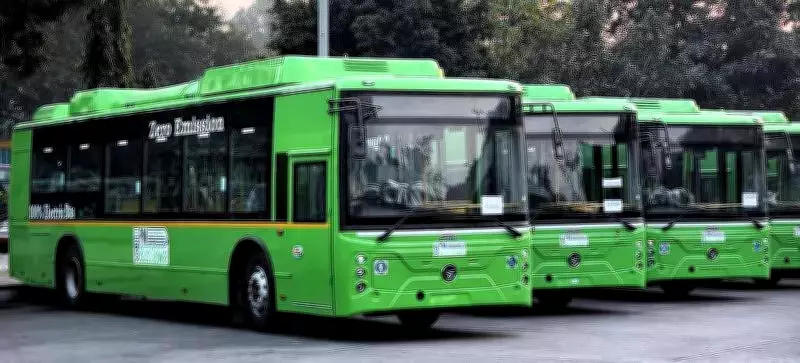
Telangana's Electric Bus Ambition Faces Central Policy Hurdles
The ambitious plan by Telangana to introduce 2,800 electric buses onto Hyderabad's roads under the central government's PM E-DRIVE scheme has encountered significant policy obstacles. This development comes as the state government pushes for an innovative model designed to protect existing jobs while modernizing public transportation infrastructure.
The Hybrid Model Proposal
Telangana has proposed a unique 'Hybrid Gross Cost Contract' model that represents a departure from standard approaches. Under this innovative framework, electric bus manufacturers would supply the vehicles, but all operational and maintenance responsibilities would remain with the state-run Telangana State Road Transport Corporation (TGSRTC). This strategic move aims explicitly to prevent potential job losses that could occur if private firms were to completely take over public transportation services.
The proposal gained official attention when Union Minister of State for Heavy Industries, Bhupathiraju Srinivasa Varma, addressed a question raised in the Lok Sabha by Telangana MP Kadiyam Kavya. The parliamentary exchange brought this state-level initiative into the national policy discussion, highlighting the growing tension between regional priorities and central guidelines.

Central Scheme Limitations
The fundamental challenge lies in the current structure of the PM E-DRIVE scheme, which supports only standard Gross Cost Contract (GCC) models. Under these established guidelines:
- Buses must be procured through Convergence Energy Services Limited (CESL), a central agency
- Operations must follow fixed national guidelines without deviation
- States have limited flexibility in implementation models
Telangana's hybrid approach, which blends public operation with private manufacturing, does not fit within these rigid parameters, effectively placing the entire proposal outside the scheme's current eligibility framework.
Financial and Practical Challenges
Beyond the policy mismatch, funding presents another significant concern for the state government. Telangana has explored using the Payment Security Mechanism to assure bus suppliers of timely payments, but this financial support is exclusively available for projects that strictly adhere to the scheme's approved formats.
The state has also suggested converting existing diesel buses into electric vehicles as a potentially more cost-effective alternative. However, such retrofitting initiatives are explicitly not permitted under the current PM E-DRIVE guidelines, further limiting Telangana's options for achieving its electric mobility goals within the existing framework.
Broader Implications for India's Electric Transition
This standoff reveals a fundamental tension in India's nationwide shift toward electric mobility. Central government schemes naturally emphasize:
- Uniform implementation rules across states
- Large-scale procurement for cost efficiency
- Standardized operational guidelines
Meanwhile, state governments like Telangana must balance these national priorities with local realities including:
- Protection of existing employment in public sector transport
- Financial constraints and budget limitations
- Readiness of local transport infrastructure for technological transition
- Regional political and social considerations
Telangana's innovative proposal highlights this growing gap between national policy design and state-level implementation needs. As negotiations continue between state and central authorities, the eventual resolution will influence far more than just the future of 2,800 electric buses in Hyderabad.
The outcome will serve as a crucial test case demonstrating whether India's clean transportation initiatives can accommodate flexible implementation models that protect jobs while advancing environmental goals, or whether states will be compelled to reshape their plans to conform to rigid central guidelines.