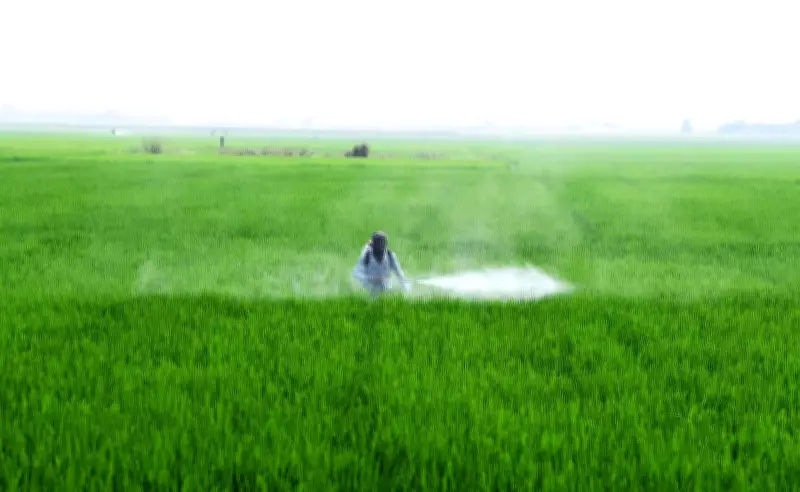
In anticipation of erratic weather patterns linked to El Nino, the Telangana government is preparing to steer farmers away from large-scale paddy cultivation during the upcoming Kharif season. Instead, officials are urging a shift towards less water-intensive, short-duration crops that can better withstand rainfall fluctuations and secure farmer incomes.
Joint Strategy by Agriculture and Horticulture Departments
The state's agriculture and horticulture departments have formulated a joint strategy to promote alternative crops that balance climate risks with economic returns. Field-level officers will soon begin outreach across villages and mandals, guiding farmers on crop choices based on local water availability and monsoon forecasts.
Over-Reliance on Paddy
While early forecasts suggest near-normal rainfall in June, officials caution against expanding paddy acreage. Experts warn that prolonged dry spells in July and August could severely impact crops that depend on a continuous water supply. To minimize risks, paddy cultivation is being advised only in command areas with assured irrigation capable of sustaining the crop through September. Elsewhere, farmers are encouraged to switch to pulses, oilseeds, and horticulture crops.

Diversification Drive
Telangana's Kharif plan covers 1.31 crore acres. Traditionally, paddy occupies nearly half of this area. This year, officials aim to restrict paddy cultivation to 35 lakh acres, far below the usual 65 lakh acres, in view of climate uncertainty. The government is promoting red gram, soybean, groundnut, sesame, sunflower, and safflower as alternatives. Horticulture officials are also pushing fruits and vegetables, citing stronger market demand and higher profit potential.
Supporting the Transition
To support the transition, marketing infrastructure is being strengthened, with plans to facilitate direct farm-to-market sales. This will help farmers secure better prices and reduce the role of middlemen. Departmental estimates suggest that maize may cover 5.4 lakh acres, red gram 5.1 lakh acres, and soybean 4.1 lakh acres. Chilli is expected on 1.9 lakh acres, while green gram, black gram, and groundnut will also occupy substantial areas.
Recommendations for Paddy Growers
For those who still opt for paddy, officials recommend coarse varieties over fine-grain types. Coarse varieties require less water, mature faster, and involve lower input costs, making them more suitable for a season marked by rainfall uncertainty.
With climate variability increasingly shaping agricultural decisions, officials say this year's focus is clear: reduce farmers' exposure to weather-related losses while ensuring stable incomes through diversified cropping patterns.