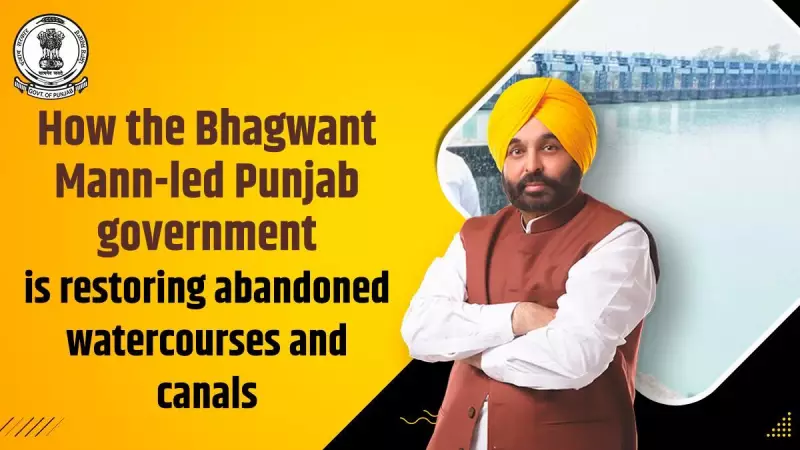
Punjab Government Launches Ambitious Project to Revive Abandoned Water Infrastructure
The Bhagwant Mann-led Punjab government has embarked on a significant initiative aimed at restoring abandoned watercourses and canals across the state. This strategic move is designed to address critical water management challenges and bolster agricultural sustainability in a region often referred to as India's breadbasket.
Addressing Water Scarcity Through Infrastructure Revival
In response to growing concerns over water scarcity and inefficient irrigation systems, the Punjab administration is focusing on rejuvenating neglected water channels. These abandoned watercourses and canals, once vital for distributing water to farmlands, have fallen into disrepair over the years due to various factors including urbanization and lack of maintenance.
The restoration efforts involve comprehensive cleaning, desilting, and repair work to ensure these waterways can once again facilitate efficient water flow. By reviving this infrastructure, the government aims to reduce dependency on groundwater extraction, which has led to alarming depletion of aquifers in Punjab.

Enhancing Agricultural Productivity and Sustainability
This initiative is particularly crucial for Punjab's agricultural sector, which contributes significantly to India's food security. The restored watercourses are expected to improve irrigation efficiency, allowing farmers to access reliable water sources for their crops.
Improved water management through these channels could lead to better crop yields and reduced water wastage, addressing both economic and environmental concerns. The government's approach aligns with broader national goals of promoting sustainable farming practices and conserving water resources.
Implementation Strategy and Expected Outcomes
The Punjab government has outlined a phased implementation plan for this restoration project:
- Identification and mapping of abandoned watercourses and canals across different districts.
- Prioritization of channels based on their potential impact on agricultural areas.
- Mobilization of resources and workforce for cleaning and repair operations.
- Integration with existing water management systems to ensure long-term sustainability.
Key expected benefits of this initiative include:
- Enhanced water availability for irrigation during critical growing seasons.
- Reduction in soil erosion and improvement in soil moisture retention.
- Decreased pressure on groundwater resources, contributing to aquifer recharge.
- Potential for increased agricultural income through improved crop productivity.
The Bhagwant Mann administration views this project as a cornerstone of its agricultural and environmental policy, demonstrating a commitment to addressing Punjab's water challenges through practical infrastructure solutions. As the restoration work progresses, it is anticipated to set a precedent for similar initiatives in other water-stressed regions of India.