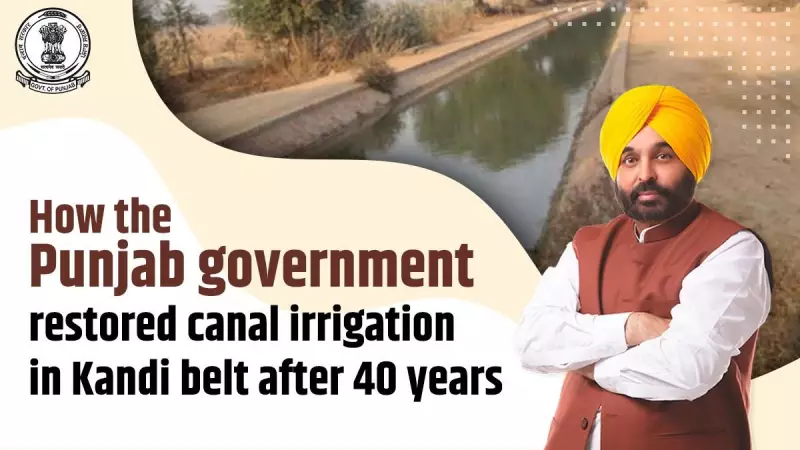
Punjab Government Achieves Historic Restoration of Canal Irrigation in Kandi Belt
In a landmark development for agricultural infrastructure, the Punjab government has successfully restored canal irrigation in the Kandi belt, ending a drought of water supply that persisted for over four decades. This monumental effort addresses long-standing challenges faced by farmers in this region, promising to transform local farming practices and boost crop yields.
Overcoming Decades of Water Scarcity
The Kandi belt, known for its arid conditions and hilly terrain, had been grappling with severe water scarcity since the canal irrigation system fell into disuse approximately 40 years ago. Farmers in this area have historically relied on erratic rainfall and limited groundwater sources, which often proved insufficient for sustainable agriculture. The restoration project, spearheaded by the state government, involved extensive rehabilitation of existing canal networks and the introduction of modern water management techniques.
Key initiatives included desilting canals, repairing damaged structures, and implementing efficient distribution mechanisms to ensure equitable water access. This comprehensive approach not only revives the physical infrastructure but also incorporates technological advancements to prevent future breakdowns.
Impact on Agricultural Productivity and Farmer Welfare
The revival of canal irrigation is expected to have a profound impact on the agricultural landscape of the Kandi belt. With a reliable water supply now available, farmers can diversify their crops beyond traditional rain-fed varieties, potentially increasing their income and reducing dependency on unpredictable weather patterns.
This development aligns with broader state and national goals to enhance food security and promote sustainable farming practices. By improving irrigation facilities, the Punjab government aims to:
- Boost crop yields and quality in the region
- Reduce the financial burden on farmers who previously invested in expensive alternative water sources
- Mitigate the effects of climate change by conserving groundwater resources
- Foster economic growth through enhanced agricultural output
Future Prospects and Government Commitment
Looking ahead, the Punjab government has expressed its commitment to maintaining and expanding the restored irrigation system. Plans are underway to integrate smart irrigation technologies, such as sensor-based monitoring and automated water distribution, to optimize usage and minimize wastage.
This project serves as a model for other regions facing similar irrigation challenges, demonstrating how persistent efforts and strategic planning can overcome historical infrastructural deficits. The successful restoration after 40 years underscores the government's dedication to addressing rural development and farmer welfare, setting a precedent for future agricultural initiatives in Punjab and beyond.