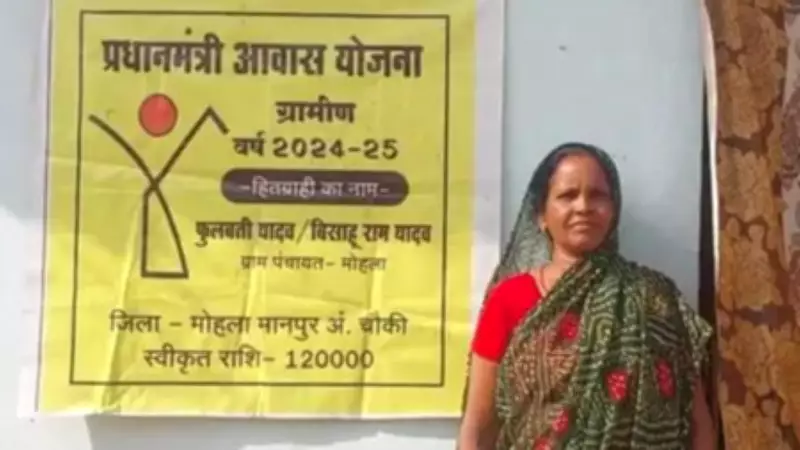
For many rural families in India, a permanent home represents far more than bricks and mortar. It embodies safety, dignity, and stability, shielding them from harsh weather and poverty. Yet millions still live in kutcha or dilapidated houses, struggling with basic living conditions. To bridge this gap, the Government of India launched the Pradhan Mantri Awaas Yojana–Gramin (PMAY-G), one of the nation's largest rural housing missions, aimed at ensuring every eligible rural household has a pucca home.
What is Pradhan Mantri Awaas Yojana–Gramin (PMAY-G)?
Launched on 1 April 2016, PMAY-G is a flagship scheme under the Ministry of Rural Development. It focuses on providing pucca houses with basic amenities to rural households that are homeless or living in kutcha and dilapidated structures. The scheme ensures houses are not just shelters but livable spaces, each with a minimum size of 25 square metres, including a dedicated area for hygienic cooking. As per official data, by September 2022, around 2 crore houses had been constructed against a total target of 2.72 crore houses.
Objective of the Scheme
The primary objective of PMAY-G is to eliminate rural housing deprivation by 2024 by providing safe and permanent housing to eligible families. It promotes a broader development approach where housing is linked with sanitation, electricity, clean fuel, and water access. The scheme encourages beneficiaries to build homes using local materials and trained masons, generating rural employment through construction.

Benefits under PMAY-G
The scheme provides direct financial assistance of Rs 1.20 lakh for households in plain areas and Rs 1.30 lakh for those in hilly regions, northeastern states, and difficult terrains. This amount is transferred directly into Aadhaar-linked bank or post office accounts. Beneficiaries can also access institutional credit of up to Rs 70,000 at a subsidised interest rate of 3 percent. Convergence with the Swachh Bharat Mission–Gramin provides up to Rs 12,000 for toilet construction. Under MGNREGA convergence, beneficiaries receive wage support for up to 95 days, including mason training opportunities. Many households also receive LPG connections under the Pradhan Mantri Ujjwala Yojana and access to electricity and piped water through other schemes.
Eligibility and Identification
Beneficiary selection is based on data from the Socio-Economic and Caste Census (SECC) 2011, which identifies housing deprivation in rural India. This data is verified by Gram Sabhas at the village level. Eligible households include those without any shelter, families living in zero, one, or two-room kutcha houses, and vulnerable groups such as manual scavengers, primitive tribal groups, destitute households, and legally released bonded labourers.
Priority and Inclusion Rules
Priority is based on deprivation level: households without any shelter are highest priority, followed by those in one-room and two-room kutcha houses. Additional weight is given to SC, ST, minority households, female-headed households, those with disabled members or no literate adult, and landless households dependent on manual labour. Special reservation norms earmark 60 percent of targets for SC and ST households and around 15 percent for minority communities at the national level. Persons with disabilities are prioritised through additional scoring criteria. However, households are excluded if they already have pucca houses, own more than two rooms, own motorised vehicles, have government jobs, pay income tax, own large agricultural land, or possess assets like refrigerators or landline phones.
Application Process
The application process is largely digital and begins through the official PMAY-G portal. Beneficiary details are entered covering personal information, bank account details, and convergence scheme data such as MGNREGA and Swachh Bharat Mission. After entering Aadhaar and other details, the beneficiary is verified through the system and validated by local authorities. Final approval is given after Gram Sabha verification.

Online Application Steps
- Visit the official PMAY-G portal.
- Enter personal details (Aadhaar, mobile, gender, etc.).
- Upload Aadhaar consent form.
- Search and select beneficiary name.
- Fill ownership and bank details.
- Add MGNREGA and SBM details.
- Submit for verification by local authorities.
- Final approval after Gram Sabha verification.
Documents Required
Applicants need an Aadhaar card, MGNREGA job card, bank or post office account details, and Swachh Bharat Mission registration if applicable. An affidavit confirming no pucca house ownership is mandatory. For illiterate applicants, consent with a thumb impression is accepted.
By combining housing with employment, sanitation, energy access, and financial inclusion, PMAY-G aims to improve overall living standards in rural India.