Bihar Chief Minister Nitish Kumar Transfers Rs 2,500 Crore to Empower Women Entrepreneurs
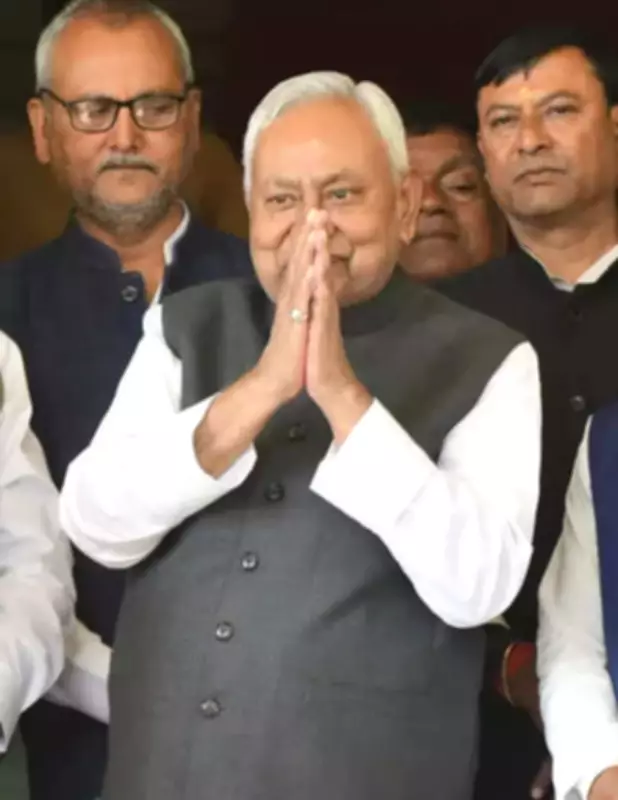
In a significant move to bolster women's empowerment and economic self-reliance, Bihar Chief Minister Nitish Kumar on Monday transferred a substantial sum of Rs 2,500 crore directly into the bank accounts of 25 lakh women beneficiaries. This initiative was executed through the Direct Benefit Transfer (DBT) mechanism under the Mukhyamantri Mahila Rozgar Yojana (MMRY), a flagship scheme designed to foster entrepreneurship among women in the state.
Event Details and Beneficiary Outreach
The transfer ceremony was conducted at the Chief Minister's official residence, 1 Anne Marg in Patna, where Nitish Kumar interacted with beneficiaries via video-conferencing. He expressed immense satisfaction, stating, "It is a matter of great happiness that Rs 10,000 each is being transferred into the bank accounts of 25 lakh women beneficiaries under MMRY to enable them to start businesses of their own choice." With this latest disbursement, the total amount transferred under the scheme has reached an impressive Rs 18,100 crore, benefiting a cumulative total of 1.81 crore women across Bihar.
Scheme Objectives and Additional Financial Support
The MMRY scheme is strategically crafted to provide initial financial assistance of Rs 10,000 to each woman beneficiary, empowering them to launch and manage their own business ventures. Nitish Kumar highlighted that a vast number of women have already initiated diverse businesses using this support. Furthermore, the government has committed to offering additional financial assistance of up to Rs 2 lakh to those women who demonstrate success in their entrepreneurial endeavors after a six-month evaluation period.

Emphasizing the government's unwavering focus on women's empowerment from its inception, the Chief Minister remarked, "Our government has always prioritized women's empowerment. This financial aid will not only bring happiness to families but also accelerate the state's growth trajectory." He also noted the visible self-confidence among the women beneficiaries, underscoring the scheme's positive impact.
Broader Context and Government Initiatives
This initiative aligns with the broader Saat Nischay-3 (2025-30) programme, specifically under its first resolve titled 'Double Employment-Double Income', which aims to double the state's per capita income. Nitish Kumar elaborated that out of the 1.56 crore beneficiaries under MMRY, 1.44 crore are from rural areas, while 12 lakh reside in urban regions, ensuring widespread coverage and inclusivity.
The scheme was officially launched by Prime Minister Narendra Modi on September 26 last year, during which Rs 7,500 crore was transferred to 75 lakh women beneficiaries via video-conferencing from New Delhi. The state cabinet, chaired by Nitish Kumar, had approved the scheme on August 29, 2025, and later, on January 29 last year, it sanctioned the process for providing additional financial assistance of up to Rs 2 lakh to selected beneficiaries.
Key Features of the Mukhyamantri Mahila Rozgar Yojana
- Provides Rs 10,000 as the first installment to each woman beneficiary to start a business of her choice.
- Aims to create employment opportunities within the state, reducing migration and boosting local economies.
- Offers up to Rs 2 lakh in additional financial assistance to successful entrepreneurs after a six-month performance review.
- Supports the state's goal of doubling per capita income under the Saat Nischay-3 programme.
- Enhances women's economic independence and contributes to overall societal development.
In conclusion, the MMRY scheme represents a pivotal step towards fostering a culture of entrepreneurship among women in Bihar, with the recent transfer of Rs 2,500 crore marking a significant milestone in this journey. The government's continued support and the beneficiaries' entrepreneurial spirit are expected to drive sustainable economic growth and empowerment across the state.