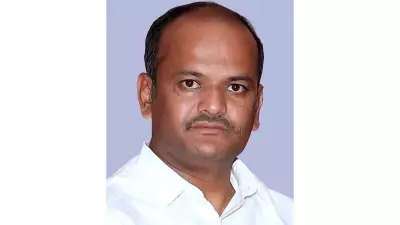
In a significant move to streamline rural employment and curb financial irregularities, the Union government has replaced the Mahatma Gandhi National Rural Employment Guarantee Act (MGNREGA) with the new Viksit Bharat–Guarantee for Rozgar and Ajeevika Mission (Gramin) Bills, commonly referred to as the V G RAM G Bills. This shift was explained by former Member of Parliament Pratap Simmha during a press interaction in Madikeri.
Addressing Systemic Leaks in the Old Scheme
Simmha acknowledged that the earlier MGNREGA scheme, launched by the UPA government, was initiated with the noble objective of preventing farmer bankruptcies and providing a social safety net through job cards. However, he pointed out that the system later became prone to intensive misuse of funds. The former MP stated that tracking where the money was being diverted proved difficult under the old framework, leading to significant wastage of government resources.
"To avoid all this and benefit all the states, the Narendra Modi-led government presented a new Bill," Simmha emphasized. The core intent of the V G RAM G legislation is to establish a systematic framework for development while plugging the loopholes that allowed corruption.

Key Features of the New VG RAM G Framework
The new scheme introduces several robust measures designed to ensure transparency and accountability. A major enhancement is the increase in guaranteed working days from 100 days to 120 days per household annually.
Simmha detailed that unlike the past, where work classification was ambiguous, the new system clearly categorizes 266 different types of works. Furthermore, stringent monitoring protocols have been put in place. "Before and after photos of the work have to be uploaded, and the audit is done once a week," he added. This digital trail and frequent auditing make the misuse of funds far more challenging.
Decentralization and Funding Pattern
The former MP also highlighted the flexibility granted to states under the new project. It enables the implementation of works tailored to local needs, allowing for the formulation of dozens of work plans at the village level. The funding pattern remains supportive, with the Centre releasing 60% of the funds.
On the sensitive topic of the scheme's name change, Simmha clarified that it was not a matter of disrespect. "Gandhi was given the respect he deserved. Swachh Bharat is also dedicated to Gandhi. The name change was made keeping in mind a comprehensive perspective," he opined, linking the rebranding to the broader 'Viksit Bharat' (Developed India) vision.
Simmha on Political Aspirations
When questioned about his political future amidst controversy over his desire to contest assembly polls from Mysuru's Chamaraja segment, Simmha affirmed his aspirations. "I am an aspirant. It is a long time since I came to state politics," he said. He expressed his connection to Mysuru and noted that the Chamaraja constituency, with its majority of educated voters, is where he aims to launch his state-level political career.
The introduction of the V G RAM G Bills marks a pivotal reform in India's rural employment guarantee landscape, aiming to combine enhanced livelihood security with stricter governance to ensure every rupee reaches its intended purpose.