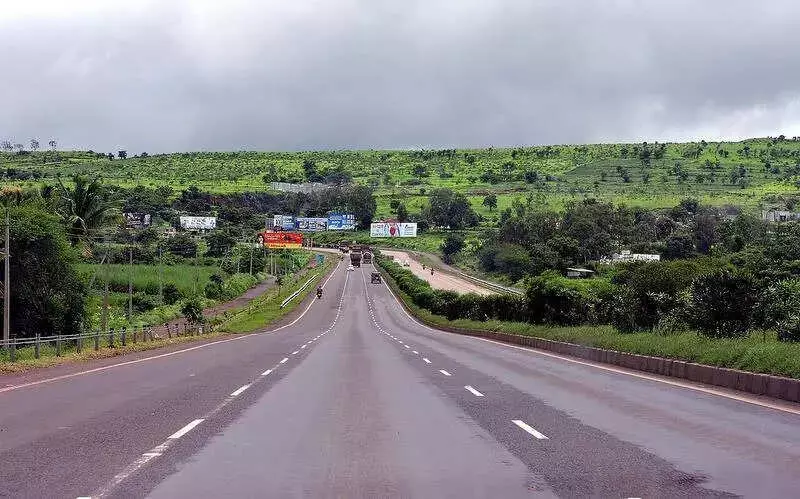
In a significant development for India's infrastructure, Union Minister for Road Transport and Highways Nitin Gadkari has announced plans for a new north-south highway network that promises to revolutionize travel between Delhi and Chennai. Speaking at a logistics conference organized by the Confederation of Indian Industries (CII) in Nagpur on Saturday, Gadkari revealed that this ambitious project will slash the distance between the two cities by a staggering 320 kilometers.
Massive Reduction in Travel Time
The minister emphasized that this reduced distance, combined with access-controlled green expressways, will dramatically cut travel time. Currently, the journey from Delhi to Chennai takes considerably longer through existing routes that pass through Surat, Mumbai, Pune, Kolhapur, or Solapur before entering southern states. With the new highway network, cars will be able to cover the distance in just 12 hours, while trucks may take approximately 20 hours. This represents a remarkable reduction of 15 hours in travel time between these two major metropolitan centers.
Route Details and Progress
Gadkari provided specific details about the new alignment during his address. The highway will pass through Surat, Nashik, Ahilyanagar, and then reach Akkalkot in Solapur district before entering Kurnool and finally reaching Chennai. He confirmed that road work has already been completed up to Surat in Gujarat and is progressing further. Importantly, cabinet approval has been secured for additional work from Akkalkot onwards, ensuring the project's continued momentum.

Comprehensive Network Connectivity
The minister highlighted that this network will extend beyond just Delhi and Chennai, connecting other crucial southern centers including Kanyakumari, Hyderabad, and Bengaluru. Gadkari shared several other travel time reductions that are either already implemented or forthcoming. By December, travel between Bengaluru and Chennai will take approximately two hours, while the Bengaluru to Mysuru drive will be reduced from 3.5 hours to just one hour. Other significant improvements include reduced travel times between Delhi-Jaipur, Delhi-Amritsar, Delhi-Katra, and Srinagar, creating an extensive network connecting north-south corridors and the northeastern regions.
Impact on Logistics and Economy
Gadkari stressed that these infrastructure improvements will substantially reduce logistics costs across the country. By shortening distances and decreasing fuel expenditure, India's logistics cost is expected to fall below that of China. The minister noted that the current logistics cost in India has already decreased to 10 percent, and further reductions are anticipated with these highway developments.
Focus on Alternative Fuels and Safety
During his address, Gadkari also discussed initiatives beyond traditional infrastructure. He mentioned the launch of three hydrogen-powered trucks six months ago and plans for hydrogen refueling stations. The minister expressed particular interest in swapping technology that allows changing truck batteries while vehicles are in motion, revealing that he has asked his son, who manages a fleet of 300 trucks, to consider purchasing such vehicles.
Enhanced Road Safety Measures
In a separate but related announcement, Gadkari discussed safety innovations being implemented by his department. They have recently acquired a vehicle-to-vehicle communication frequency that enables connectivity between vehicles on the road through satellite technology. This system allows truck drivers to communicate directly with car drivers, potentially preventing accidents through better coordination. Additionally, the minister mentioned new regulations that restrict private operators from manufacturing sleeper coaches, limiting this capability to original equipment manufacturers only. He also emphasized the importance of driver training and has mandated air-conditioned cabs for drivers to improve working conditions.
This comprehensive highway development represents a major step forward in India's transportation infrastructure, promising not only reduced travel times but also significant economic benefits through lowered logistics costs and enhanced safety measures.