Andhra Pradesh Chief Minister N Chandrababu Naidu has directed officials to formulate a clear action plan for the effective rollout of the newly introduced G-RAM-G scheme in the state. The move aims to provide a significant boost to rural employment and infrastructure development.
Review Meeting for Effective Implementation
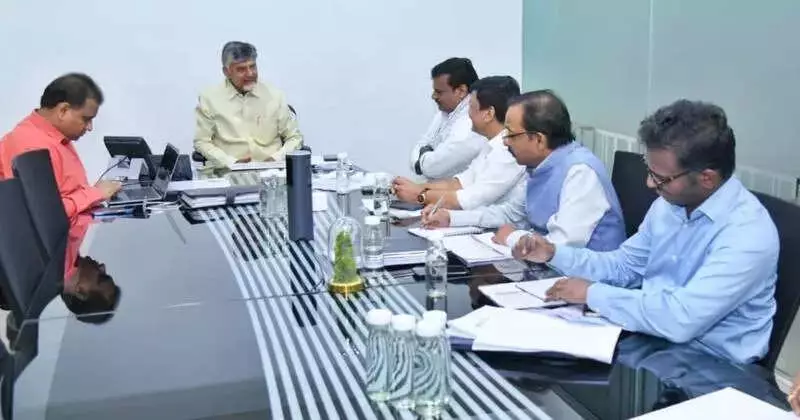
On Saturday, Naidu chaired a crucial review meeting at his camp office in Vijayawada to strategize the public outreach for the G-RAM-G scheme. The meeting was attended by BJP state president PVN Madhav and Jana Sena minister Kandula Durgesh. The discussion centered on how to effectively communicate the benefits of this new central initiative to the intended beneficiaries across Andhra Pradesh.
The Union government recently replaced the long-running Mahatma Gandhi National Rural Employment Guarantee Scheme (MGNREGS) with the Grameen Rozgar and Ajeevika Mission (G-RAM-G), also known as the Viksit Bharat Guarantee for Rozgar and Ajeevika Mission. Naidu emphasized that the new framework promises a more robust system for generating rural employment while creating durable assets in villages.

A Win-Win for Labourers and Farmers
Highlighting a key benefit, the Chief Minister stated that G-RAM-G offers an additional 25 days of employment without interfering with critical agricultural operations. "It's a win-win for wage labourers and farmers," Naidu remarked. He further explained that the scheme's expanded guidelines now permit a wider range of work categories.
These new categories include installations for solar lighting, which are expected to significantly strengthen rural infrastructure. Other permissible works under the scheme involve the construction of Gokulams (cattle sheds), plantations, fodder cultivation for livestock-based livelihoods, and various employment generation projects.
Convergence with Flagship Missions for Holistic Development
Naidu outlined a comprehensive roadmap to leverage central schemes like G-RAM-G for implementing large-scale development programmes across Andhra Pradesh. He pointed out that the scheme will converge with other major initiatives such as the Jal Jeevan Mission and Amarajeevi Jaladhara to ensure the goal of providing drinking water to every household.
"With systematic planning, we can achieve the twin goals of Viksit Bharat and Swarna Andhra-2047," Naidu noted. He stressed the pivotal role of Gram Sabhas in the democratic process of approving and scheduling works. Furthermore, he insisted on maintaining online transparency by uploading all project details for public scrutiny.
Focus on Transparency and Water Conservation
During the meeting, Minister Kandula Durgesh highlighted the scheme's potential for water conservation and groundwater recharge through the construction of check dams, particularly in rural and forested areas. He assured that the Centre's guidelines are designed to eliminate any scope for corruption and will strengthen local bodies through a genuine Centre-state partnership.
Echoing the sentiment, BJP state president PVN Madhav pointed to the scheme's technology-driven monitoring system. This system incorporates geo-referencing, biometric verification, and geospatial tools to ensure accountability and efficient tracking of projects and wages, aiming for a leak-proof implementation.