India is gearing up for a significant transformation of its flagship rural employment program. A new report from SBI Research outlines a proposed redesign of the Mahatma Gandhi National Rural Employment Guarantee Act (MGNREGA), rebranding it as the Viksit Bharat Guarantee for Rozgar and Ajeevika Mission (Gramin), or VB-G RAM G. This overhaul aims to address long-standing structural flaws while keeping the core promise of job support intact.
Core Changes in the Proposed Overhaul
The proposed framework represents a fundamental shift in approach. It moves away from a purely demand-driven model to one that emphasizes creating productive assets, outcome-based planning, and stronger accountability at the village level. One of the most notable changes is the increase in guaranteed employment days from 100 to 125 per household per year.
The nature of permitted work will also be expanded and rationalized into four clear categories: water security, core rural infrastructure, livelihood-related infrastructure, and climate-resilient infrastructure. This change is intended to better align public spending with local development needs and could help narrow the persistent gap between work demanded and work provided, which has averaged around 14% since the 2020 financial year.
A major shift is proposed in the funding architecture. While MGNREGA operated on a 90:10 Centre-state funding ratio, the new VB-G RAM G framework suggests a 60:40 split for most states. SBI Research argues that fears of straining state finances are overblown, noting that most states have borrowed below their fiscal limits. Their analysis suggests states could collectively gain about ₹17,000 crore compared to average allocations from the past seven years.
Addressing Weaknesses and Expert Concerns
The report highlights several inefficiencies in the current system. It estimates that structural weaknesses and uneven state-level efficiency led to lost job opportunities for approximately 12.2 million households in a single year, despite available funds. Real wage growth under MGNREGA has remained modest, dampening work demand in some states, and the mandated unemployment allowance has been poorly implemented with negligible payouts in recent years.
However, experts caution against moving too far from the demand-driven ethos. Ashish Kumar Singh, president of the civil rights group Citizen Forum in Bihar's Katihar, warned the report is "overly optimistic." He stated that shifting to a more normative, outcome-linked framework risks weakening the scheme's core strength. He fears increased complexity could disadvantage poorer states and villages with weaker administrative capacity, potentially leading to greater exclusion rather than improved outcomes.
Focus on Accountability and Uneven Outcomes
The new design proposes significantly stronger oversight. It plans to use biometric authentication, spatial technology for planning, digital monitoring, weekly public disclosures, and strengthened social audits. Greater empowerment of village councils (gram panchayats) is expected to improve planning and reduce fund misappropriation. The framework also seeks to reform the broken unemployment allowance mechanism by embedding compensation within a time-bound grievance system, making payments mandatory if work is not provided on time.
The report uses stark state-wise disparities to justify the need for change. In the current fiscal year, while 475 million households have worked under MGNREGA nationally, generating over 1.71 billion person-days, outcomes vary wildly. Uttar Pradesh generated the highest absolute number of person-days (over 185 million), but states like Kerala (48 days), Jammu & Kashmir (47 days), and Jharkhand (42 days) provided more average days of employment per household. The national average remains just 36 days per household, far below the legal guarantee of 100 days.
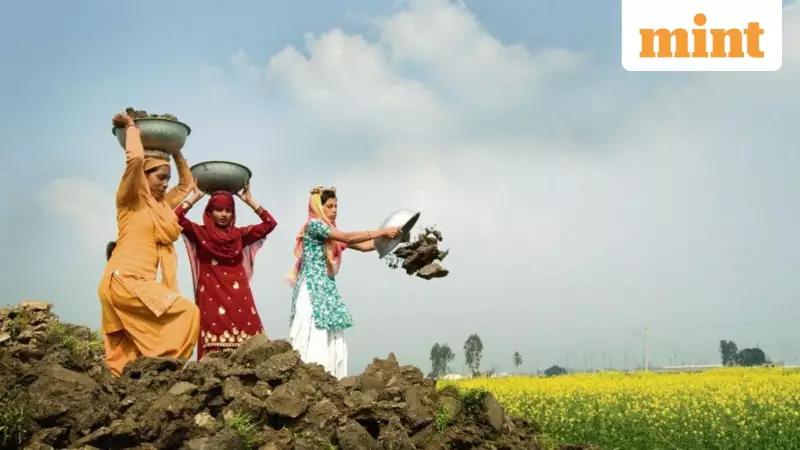
Women's participation remains a strong pillar, constituting nearly 58% of total workers. Yet, the completion of the full 100 days of work is concentrated in only a handful of states, pointing to widespread structural constraints. SBI Research positions VB-G RAM G not as a replacement but as a recalibration, aimed at retaining social inclusion benefits while delivering stronger development outcomes, higher-quality assets, and greater accountability in India's rural landscape.