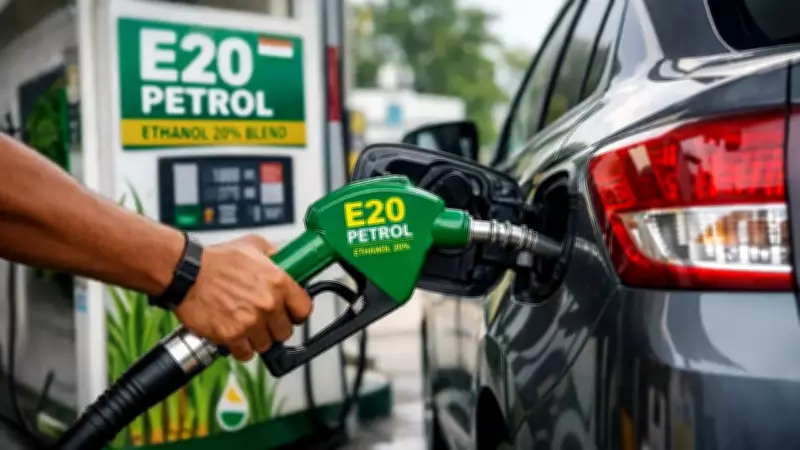
India Mandates Nationwide Sale of E20 Petrol from April 2026
The Government of India has issued a landmark directive making the sale of ethanol-blended petrol compulsory across all states and Union Territories, effective from April 1, 2026. This mandate requires oil marketing companies to supply petrol mixed with ethanol up to 20%, adhering to specifications set by the Bureau of Indian Standards and maintaining a minimum Research Octane Number (RON) of 95.
Notification Details and Exemptions
In a notification released on February 17, the Ministry of Petroleum and Natural Gas outlined that the ethanol-mixed motor spirit must contain ethanol up to 20% and meet the 95 RON requirement nationwide. However, the Centre retains the authority to grant exemptions under exceptional circumstances for specific areas and limited durations, as reported by PTI.
Background and Accelerated Targets
This move follows India's achievement of 10% ethanol blending in petrol in June 2022, which was accomplished five months ahead of schedule. Encouraged by this success, the government advanced the target for 20% blending to 2025-26, originally set for 2030. Currently, most fuel stations across the country already supply E20 petrol, which consists of 20% ethanol and 80% petrol.

Economic and Environmental Benefits
The oil ministry estimates that since 2014-15, substituting a portion of petrol with ethanol has led to foreign exchange savings exceeding Rs 1.40 lakh crore. The policy is designed to reduce dependence on imported crude oil, curb emissions, and benefit farmers by increasing demand for crops like sugarcane and maize, as well as surplus agricultural produce.
Ethanol, produced from renewable sources such as sugarcane and maize, is a domestically manufactured fuel that burns more cleanly than conventional petrol. A life-cycle emissions assessment by NITI Aayog found that ethanol from sugarcane and maize results in greenhouse gas emissions approximately 65% and 50% lower, respectively, compared to petrol.
Technical Specifications and Engine Safety
The requirement for a minimum RON of 95 has been introduced to protect engines from potential damage. RON indicates a fuel's ability to resist knocking, which is premature ignition inside the engine that can cause pinging noises, reduced performance, and mechanical issues over time. A higher RON rating signifies better stability under pressure.
Ethanol naturally has a high octane rating of about 108 RON. Blending petrol with 20% ethanol enhances its resistance to knocking, making it suitable for modern high-compression engines. The government notes that E20 fuel offers improved acceleration, smoother driving performance, and reduces carbon emissions by roughly 30% compared to E10 fuel.
Vehicle Compatibility and Fuel Efficiency Concerns
Industry officials report that most vehicles produced in India between 2023 and 2025 are engineered to operate on E20 fuel, with no significant technical problems anticipated. However, older vehicles may experience a modest decline in fuel efficiency of around 3-7%, and there could be some deterioration in rubber and plastic components over time.
Last year, the Ministry of Petroleum & Natural Gas addressed concerns about vehicle damage from E20 petrol, stating that issues related to performance and fuel efficiency were anticipated as early as 2020. An inter-ministerial committee of NITI Aayog, supported by technical studies from IOCL, ARAI, and SIAM, conducted detailed evaluations.
Advantages of Ethanol-Blended Fuels
Ethanol's higher octane rating—approximately 108.5 compared to petrol's 84.4—makes it ideal for engines requiring higher octane levels. Vehicles calibrated for E20 fuel tend to provide better acceleration, particularly beneficial in urban driving conditions. Additionally, ethanol's higher heat of vaporisation lowers temperatures in the intake manifold, increasing the density of the air-fuel mixture and enhancing volumetric efficiency.
This comprehensive mandate underscores India's commitment to sustainable energy, economic resilience, and agricultural support, positioning the nation as a leader in renewable fuel adoption.