Chandigarh's Solar Revolution: Over 1,000 Rooftop Installations Under PM Surya Ghar Yojana
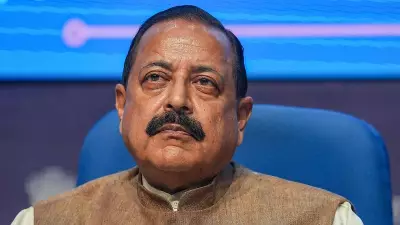
In a significant boost to renewable energy adoption, Chandigarh has achieved a milestone with 1,026 rooftop solar installations under the PM Surya Ghar: Muft Bijli Yojana, as revealed in recent parliamentary data. The figures, shared by Minister of State for New & Renewable Energy and Power Shripad Yesso Naik in the Rajya Sabha, highlight the city's rapid progress in solar power integration since the scheme's launch nearly two years ago.
Application Surge and Digital Streamlining
As of January 28, 2026, a total of 1,542 applications have been submitted through the national portal, indicating strong residential interest. Minister Naik emphasized that the scheme is demand-driven and open to all grid-connected residential consumers. To accelerate adoption, the government has implemented several streamlined measures:
- Technical feasibility approval has been waived, removing a key bureaucratic hurdle.
- Auto load enhancement is permitted for systems up to 10 kW, simplifying capacity upgrades.
- Net-metering agreements are shifting to digital mode or being waived, significantly reducing commissioning delays.
Financial Benefits and Subsidy Structure
The PM Surya Ghar Yojana offers substantial financial incentives to make solar power accessible:

- Central financial assistance covers 60% of system cost for installations up to 2 kW.
- For systems between 2 kW and 3 kW, 40% subsidy is provided on the additional cost, capped at 3 kW.
- Residents benefit from 300 units of free electricity per month, leading to significant savings on electricity bills.
- Low-interest, collateral-free loans are available from nationalized banks at concessional rates linked to the repo rate.
Minister Naik noted that the entire process—from registration to subsidy disbursal—is fully online, ensuring transparency and efficiency.
Chandigarh's Cumulative Solar Achievements
Beyond individual installations, Chandigarh has built an impressive solar infrastructure:
- Cumulative rooftop solar capacity of 103 MWp across 11,663 sites.
- All 377 government non-residential buildings have achieved 100% rooftop solar saturation.
- Most government housing units have been covered where feasible.
- 37 buildings in the city have attained net-zero energy status, generating enough solar power annually to offset their consumption.
Pathway to a Model Solar City
Officials stated that this progress marks a crucial step in Chandigarh's ambition to become a model solar city. The long-term target focuses on achieving net-zero status for government buildings, aligning with broader sustainability goals. The combination of financial incentives, streamlined processes, and strong government commitment has positioned Chandigarh as a leader in urban solar adoption, setting a benchmark for other cities across India to follow in the renewable energy transition.