Cabinet Committee Approves Major Railway Infrastructure Projects
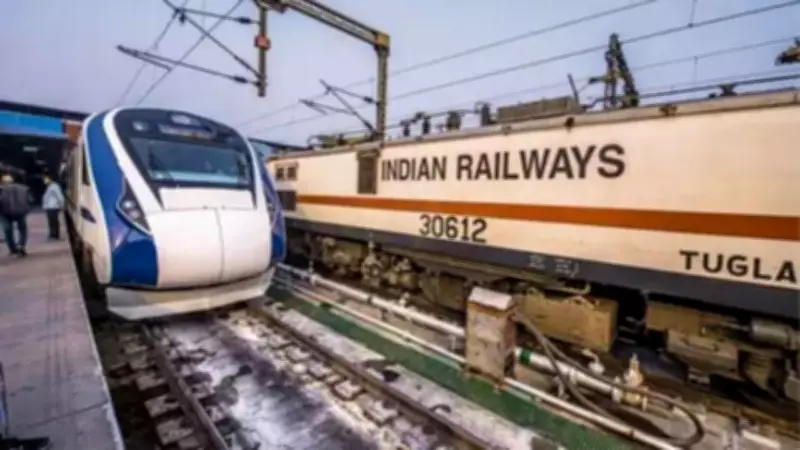
The Cabinet Committee on Economic Affairs (CCEA) has given its formal approval to two significant multi-tracking railway projects with a combined investment of Rs 24,815 crore. These ambitious initiatives are strategically located in Uttar Pradesh and Andhra Pradesh, with the primary objective of alleviating congestion and substantially boosting both freight and passenger movement across these crucial regions.
Project Details and Strategic Importance
The approved projects are integral components of the PM-Gati Shakti National Master Plan, designed to improve multimodal connectivity and enhance overall logistics efficiency. The first project involves the construction of the third and fourth railway lines between Ghaziabad and Sitapur in Uttar Pradesh. This 403-kilometer route, with an extensive track length of 859 kilometers, carries an estimated cost of Rs 14,926 crore.
The second project focuses on establishing the third and fourth lines between Rajahmundry (Nidadavolu) and Visakhapatnam (Duvvada) in Andhra Pradesh. Spanning 198 kilometers with a track length of 458 kilometers, this development is budgeted at Rs 9,889 crore. Together, these two projects will add approximately 601 kilometers to the expansive Indian Railways network, marking a substantial infrastructure upgrade.

Enhanced Connectivity and Operational Benefits
The government release emphasized that the increased line capacity will lead to a significant enhancement in mobility, directly translating to improved operational efficiency and greater service reliability for Indian Railways. The Ghaziabad-Sitapur corridor will traverse key districts including Ghaziabad, Moradabad, Bareilly, Shahjahanpur, and Sitapur. To effectively decongest busy nodes, the plan includes the construction of six new stations on bypass sections along this route.
Conversely, the Rajahmundry-Visakhapatnam project is poised to dramatically improve connectivity to major ports such as Visakhapatnam, Gangavaram, Machilipatnam, and Kakinada. This enhanced access is expected to streamline freight movement and bolster economic activity in the coastal regions of Andhra Pradesh.
Broader Economic and Environmental Impact
Beyond transportation, these projects are projected to deliver wide-ranging benefits. They are anticipated to lower overall logistics costs, generate substantial employment opportunities during and after construction, and contribute to environmental sustainability. The government estimates a reduction in carbon emissions by approximately 180.31 crore kilograms, an environmental benefit equivalent to planting an impressive 7.33 crore trees.
Furthermore, the improved railway infrastructure will facilitate better access to several prominent tourist and pilgrimage destinations. These include Dudheshwarnath Temple, Garhmukteshwar Ganga Ghat, Naimisharanya, Annavaram, Antarvedi, and Draksharamam, potentially boosting tourism and local economies.
The projects are slated for completion by the fiscal year 2030-31. Their execution across 15 districts in Uttar Pradesh and Andhra Pradesh represents a major step forward in national infrastructure development, aligning with broader goals of economic growth and efficient transportation under the PM-Gati Shakti framework.