Union Budget 2026-27 Unveils Major Push for High-Value Agriculture Crops
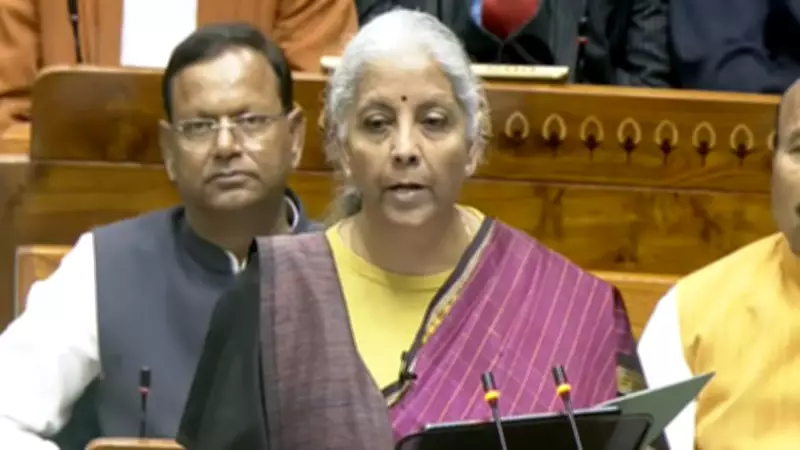
Finance Minister Nirmala Sitharaman presented a comprehensive vision for transforming India's agricultural landscape during her Union Budget 2026-27 speech on Sunday. The budget introduced a series of targeted initiatives specifically designed to boost high-value agriculture, with special focus on crops like coconut, cashew, cocoa, and sandalwood.
Coconut Promotion Scheme to Enhance Global Competitiveness
One of the flagship announcements was the unveiling of a new Coconut Promotion Scheme aimed at significantly increasing production and productivity in major coconut-growing states across India. "To further enhance competitiveness in coconut production, I propose a coconut promotion scheme to increase production and enhance productivity through various interventions," Sitharaman stated during her budget presentation.
The scheme will implement several key measures including:

- Replacing old and non-productive trees with high-yielding saplings
- Introducing improved varieties in major coconut-growing regions
- Strengthening India's position in global coconut markets
Dedicated Program for Cashew and Cocoa Sectors
The finance minister also announced a dedicated program for Indian cashew and cocoa with ambitious goals to transform these sectors. "A dedicated program is proposed for Indian cashew and cocoa to make India self-reliant in raw cashew and coconut production and processing," Sitharaman explained.
The program has three primary objectives:
- Reduce India's dependence on imports of raw cashew and cocoa
- Enhance export competitiveness in global markets
- Transform Indian cashew and cocoa into premium global brands by 2030
Reviving India's Sandalwood Heritage
Recognizing the cultural and economic significance of sandalwood, Sitharaman announced that the Centre would collaborate closely with state governments to revive this traditional sector. "Sandalwood is closely linked to India's social and cultural heritage. Our government will partner with state governments to promote focused cultivation and post-harvest processing," she emphasized.
The sandalwood initiative will focus on:
- Promoting focused cultivation practices
- Improving post-harvest processing techniques
- Restoring the glory of the Indian sandalwood ecosystem
Orchard Rejuvenation and High-Density Cultivation
The budget also proposed measures to rejuvenate old and low-yielding orchards while promoting high-density cultivation of walnuts, almonds, and pine nuts. "To rejuvenate old, low-yielding orchards and expand high-density cultivation of walnuts, almonds, and pine nuts, we will support a dedicated program," Sitharaman added.
This initiative aims to achieve multiple benefits:
- Enhance farmer incomes through improved productivity
- Promote value addition in horticulture products
- Create new opportunities for youth engagement in agriculture
Animal Husbandry and Livestock Development
In the animal husbandry sector, the finance minister outlined plans to generate quality employment in rural and peri-urban areas through a credit-linked subsidy programme. The government will focus on modernizing livestock enterprises and building integrated value chains for livestock, dairy, and poultry products.
Key components of the animal husbandry initiative include:
- Modernization of livestock enterprises
- Development of integrated livestock, dairy and poultry value chains
- Promotion of livestock farmer producer organizations
Broader Vision for High-Value Agriculture
For high-value agriculture more broadly, Sitharaman emphasized that support would be extended to crops such as coconut and sandalwood to diversify farm output, improve productivity, raise farm incomes, and create new employment opportunities. The comprehensive approach aims to position India as a global leader in premium agricultural products while ensuring sustainable livelihoods for farmers across the country.

The budget announcements represent a strategic shift toward value-added agriculture that leverages India's traditional strengths while embracing modern cultivation and processing techniques to compete effectively in international markets.