The Bharatiya Janata Party-led government in Assam has significantly ramped up its flagship initiative for women's economic self-reliance. The state is racing against time to disburse Rs 10,000 in seed capital to women across all 35 districts, targeting an ambitious goal of creating 40 lakh 'Lakhpati Baideos' or women entrepreneurs.
Massive Scale of the Empowerment Initiative
Chief Minister Himanta Biswa Sarma announced on Tuesday that more than 15 lakh women have already received the initial financial support under the 'Mukhya Mantri Mahila Udyamita Abhiyaan' (MMUA). The scheme, which was launched on April 1 last year, initially aimed to benefit 32 lakh women, but the target was later increased to 40 lakh. Official data claims that eight lakh beneficiaries have already achieved the 'Lakhpati' status, thereby strengthening household incomes and injecting new vitality into Assam's rural economy.
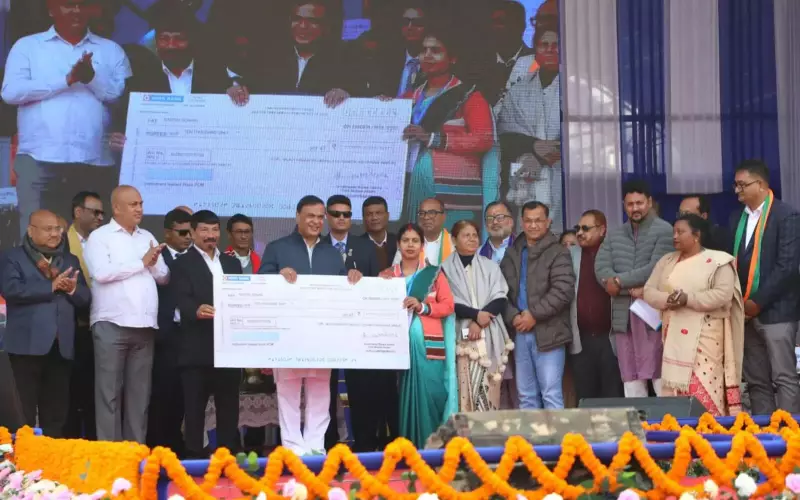
"We are leaving no stone unturned to empower our #NariShakti and turn their dreams into reality," the Chief Minister posted on his X handle after a cheque distribution ceremony in Bokakhat. He highlighted that over 27,000 women from the Bokakhat area received the support, bringing the state closer to its dream of 40 lakh 'Nari-preneurs'.

Financial Roadmap and Broader Economic Vision
The MMUA scheme is structured to provide graduated financial support. After the successful utilization of the initial Rs 10,000 seed capital, each beneficiary becomes eligible for a loan of Rs 25,000 at a subsidized interest rate. A third tranche of funding, up to Rs 50,000, is then extended to the most successful entrepreneurs to help them scale their ventures.
CM Sarma connected this grassroots empowerment to a larger vision for Assam's economic transformation. "From being a dependent state and importer of essential items, we are now gradually turning into a contributor state, Atmanirbhar in many aspects," he stated. He emphasized that the effort to create 40 lakh Lakhpati Didis is set to give a major boost to the state's overall economy.
Political Undertones and Strategic Outreach
The scheme's political significance has been underscored by the Chief Minister himself. Last November, he pointed out that the MMUA model from Assam was adopted by the Bihar government. Bihar's 'Mukhyamantri Mahila Rojgar Yojana', launched by Prime Minister Narendra Modi on September 26, involved direct transfers of Rs 10,000 each to 75 lakh women. Sarma had stated that the Assam model became a primary talking point and a key factor in the NDA's massive mandate in Bihar.
Political observers note the crucial timing of the scheme's intensive rollout ahead of assembly elections. The government's focused outreach to women, who form a decisive vote bank, is seen as a strategic move to consolidate support in both rural and urban areas. Furthermore, by positioning women as primary economic drivers, the ruling alliance is crafting a powerful narrative of empowerment intended to resonate across communities.
The government has also used the scheme to reach into opposition strongholds. On November 10 last year, the CM distributed seed capital to 23,336 women in Golakganj, Dhubri—a constituency where the Congress won by a significant margin in the 2024 Lok Sabha elections. Sarma's message then was that development and empowerment transcend traditional voter bases and politics, signaling the BJP's intention to project an inclusive image and win trust in areas historically favorable to rivals.