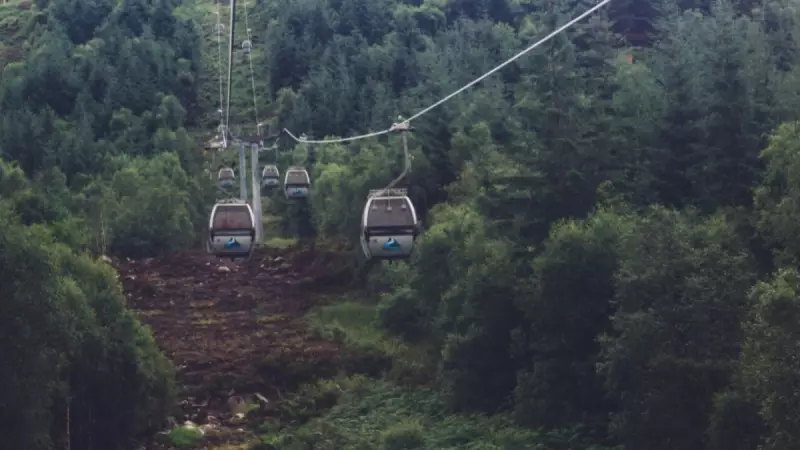
The Union Road Transport and Highways Ministry has taken a significant step toward enhancing connectivity in Tamil Nadu by seeking detailed project reports for six proposed ropeway corridors. These ambitious projects fall under the central government's flagship Parvatmala scheme and promise to revolutionize transportation in the state's challenging terrains.
Six Strategic Locations Identified for Development
The Centre has formally requested the Tamil Nadu government to prepare and submit comprehensive detailed project reports for all six identified ropeway corridors. This move signals the government's serious intent to push forward with these infrastructure projects that could dramatically improve mobility in hilly and congested areas.
The proposed locations represent a strategic selection of sites where ropeway systems could provide the most significant benefits. While the exact locations continue to be finalized, the selection criteria focus on areas where traditional road transport faces challenges due to steep gradients, difficult terrain, or urban congestion.

Parvatmala: National Ropeway Development Program
The Parvatmala scheme represents one of the most innovative infrastructure initiatives launched by the central government in recent years. Designed as a national ropeway development program, its primary objective is to improve connectivity in hilly regions while reducing travel time and congestion on conventional road networks.
This program aligns with the government's broader vision of developing alternative transportation solutions that are environmentally sustainable and cost-effective. Ropeway systems offer particular advantages in difficult terrain where building conventional roads would be either prohibitively expensive or environmentally damaging.
The economic benefits of these projects extend beyond mere transportation. They are expected to boost tourism significantly by providing access to previously difficult-to-reach scenic spots while creating numerous employment opportunities during both construction and operational phases.
Implementation Timeline and Next Steps
The request for detailed project reports marks the crucial first phase in making these six ropeway corridors a reality. Once the Tamil Nadu government submits the DPRs, the Centre will evaluate them for technical feasibility, financial viability, and environmental compliance.
The development of these ropeway projects will follow a structured approach beginning with thorough feasibility studies, followed by detailed design, environmental clearances, and finally, construction. The government is likely to explore various implementation models, including public-private partnerships, to ensure timely completion.
These six ropeway corridors in Tamil Nadu represent just the beginning of what could become a comprehensive network of alternative transportation systems across India's challenging terrains. The successful implementation of these projects could serve as a model for other states with similar geographical challenges.
As the detailed project reports undergo preparation, stakeholders including local communities, tourism operators, and transportation experts are watching closely. The potential for these ropeway systems to transform connectivity while boosting local economies makes them one of the most anticipated infrastructure developments in Tamil Nadu's recent history.