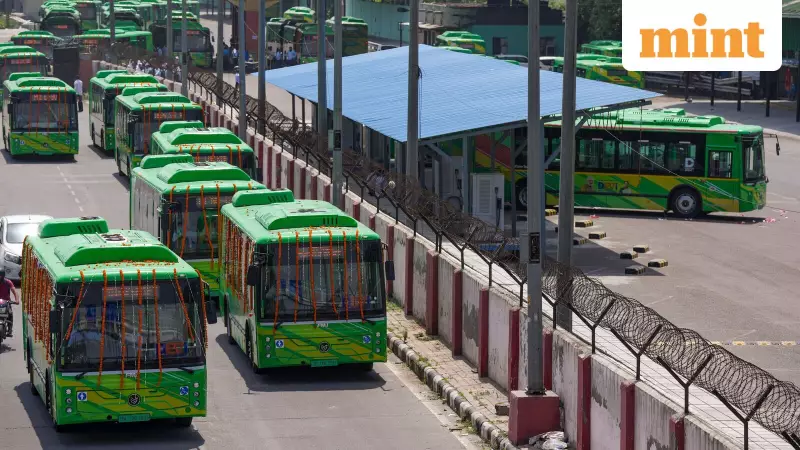
The Indian government is accelerating its electric mobility push with plans to deploy 2,600 new electric buses across three major metropolitan cities in the second phase of the PM E-Drive scheme. This significant move comes as Maharashtra fulfills crucial payment security requirements that had previously delayed the green transportation initiative.
Allocation Details and City-Wise Distribution
According to sources familiar with the development, the Ministry of Heavy Industries is considering allocating 1,000 electric buses to Mumbai, 800 to Pune, and another 800 to Hyderabad under the ₹10,900-crore PM E-Drive scheme. This allocation follows the Maharashtra government's original request for 1,500 e-buses for Mumbai and 1,000 for Pune, which has been refined after evaluation.
The approval process moved forward after Maharashtra complied with the scheme's payment security conditions in September 2025. Earlier, the state's inability to meet these requirements had stalled the deployment of electric buses under the central government's ambitious program.

Broader Scheme Objectives and National Impact
The PM E-Drive scheme, launched in 2024, aims to facilitate the procurement and operation of 14,028 electric buses across nine Indian cities with populations exceeding 4 million. The targeted cities include Delhi, Surat, Ahmedabad, Hyderabad, Bengaluru, Mumbai, Pune, Kolkata, and Chennai.
Environmental experts highlight the significant impact of transitioning to electric buses. "Substituting diesel buses with electric ones will reduce vehicular emissions by a significant amount," explained Ashim Sharma, Senior Partner at Nomura Research Institute. "Buses run continuously for long periods compared to personal vehicles, so electrification delivers substantial emission reductions."
Implementation Challenges and Infrastructure Requirements
The deployment of electric buses faces several practical challenges that require careful planning and execution. Key obstacles identified include:
- Inadequate charging infrastructure, particularly in bus depots
- High costs for bus manufacturers participating in tenders
- Stringent conditions in bidding processes
- Need for comprehensive depot planning and charger installation
The scheme operates under a Gross Cost Contract (GCC) model where manufacturers retain bus ownership on their balance sheets. State transport authorities pay operating charges on a per-kilometer basis through ten-year contracts, with central government subsidies supporting the payments.
Maharashtra has demonstrated strong electric vehicle adoption momentum, with e-bus sales rising 48% to 665 units in the first half of FY26. The state's performance in NITI Aayog's 2025 India Electric Mobility Index further confirms its leadership position in the electric mobility transition.
Nationwide, e-bus sales grew 37% year-on-year to 2,241 units during April-September 2025, though India still trails global averages with only six e-buses per million people compared to the world average of 85.
The successful implementation of the PM E-Drive scheme's second phase could significantly accelerate India's transition to sustainable public transportation while addressing urban air quality concerns in some of the country's most populated cities.