Karnataka Plans Economic Profiling for Income Certificates
Karnataka government plans economic profiling of households to issue income certificates, aiming to streamline welfare schemes and target beneficiaries accurately.


Karnataka government plans economic profiling of households to issue income certificates, aiming to streamline welfare schemes and target beneficiaries accurately.

Union Minister Shivraj Chouhan has directed Nafed and NCCF to enhance MSP procurement operations to ensure farmers receive fair prices for their produce.
The Yogi government provides monthly pension to 2,923,364 elderly women, with Jaunpur, Azamgarh, and Ballia topping the list. This initiative improves their living standards.
The Indian government is considering increasing the sum insured under PMJJBY, PMSBY, and APY as these schemes complete 10 years, aiming to enhance social security for 57 crore adults.

Shared lists with real-time sync. No signup needed — just open and shop together.
Recommended
Maharashtra plans a policy for Recognition of Prior Learning (RPL) following a fraud at a Mumbai college, affecting over 130 students whose degrees are unrecognised.

MGNREGA workers in Punjab threaten mass protest on May 13 if salaries delayed for 5-6 months are not released. Union demands regularisation and warns of escalation.
Chief Minister Dr. Yadav urges prosperous families to set a trend for mass marriages, curbing extravagance. Over 1.70 lakh married under CM Kanya Vivah/Nikah Yojana.

NITI Aayog report reveals government school enrollment in India fell from 71% in 2005 to 49.24% in 2024-25, while private schools expand. Learning gaps and teacher shortages persist.
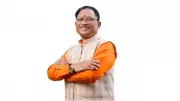
Chief Minister Vishnu Deo Sai interacted with women in forest villages during Jan Chaupal, celebrating their journey from 'Lakhpati Didi' to aspiring 'Crorepati Didis'.
Shared lists with real-time sync. No signup needed — just open and shop together.
Recommended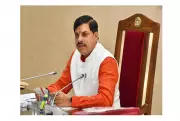
Madhya Pradesh CM Dr. Yadav warns against payment delays to farmers, announces disbursal of nearly ₹1 crore to 64 Chaurai farmers, and mandates timely payments in all mandis.
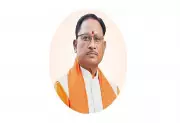
Chhattisgarh government introduces a 50% rebate on land registration fees for properties registered in women's names, aiming to boost women empowerment and property ownership.

In a historic move under Operation Sindoor, the Golden Temple's eternal lights were turned off after 54 years, marking a significant change in the shrine's history.
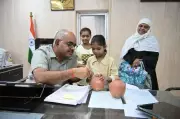
An 11-year-old girl's broken piggy bank at a Janata Darshan in Kanpur moved the DM to action, who gifted her a new one and Rs 1,000.

Travancore Devaswom Board plans eco-friendly Sabarimala with tree plantation, improved crowd control, and sanitation for Mandala-Makaravilakku season.
Shared lists with real-time sync. No signup needed — just open and shop together.
Recommended
Heavy rain and storms in March damaged crops across 13 Bihar districts, affecting 4.5 lakh farmers. Applications for Input Subsidy Scheme open until May 5.

Goa's Tribal Bhavan project, delayed for years due to legal disputes, will invite tenders before May 25. Minister Ramesh Tawadkar announced financial approval is pending, with Rs 15 crore budgeted for FY2026.
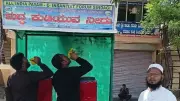
Aravatiges, traditional free drinking water stalls, are a common sight across Karnataka during summer, offering relief to many. This simple act of kindness highlights community care.

A farmers' association in Trichy has urged TVK president Joseph Vijay to implement his election pledges, including higher MSP and loan waivers, immediately upon taking office.

Dehradun district administration directs departments to expedite work on a child rehabilitation centre, increase CCTV surveillance, and run anti-drug campaigns to curb substance abuse among youth.
Shared lists with real-time sync. No signup needed — just open and shop together.
Recommended
Tamilaga Vettri Kazhagam's manifesto promises monthly cash, free LPG, and gold for brides. While targeting women voters, concerns over fiscal sustainability and implementation arise.
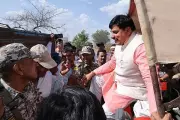
Madhya Pradesh CM Dr. Yadav conducted a surprise inspection at a procurement centre in Ujjain, warning officials against laxity. The government may extend the procurement deadline if needed, continuing wheat, gram, and lentil purchases.
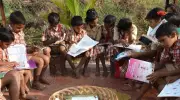
The first round of RTE admissions in Gujarat allotted 77,925 seats to Class 1 students in private schools. 5,753 seats remain vacant; parents must confirm by May 12.

A woman from Chinchwad allegedly duped two acquaintances of Rs 7.50 lakh by promising government jobs. The Ravet police have registered a case and are searching for the absconding accused.

Around 1.40 lakh anganwadi workers in Rajasthan plan to strike from next week due to three months of unpaid honorarium, demanding timely payments and relief from extra duties.
Shared lists with real-time sync. No signup needed — just open and shop together.
Recommended
Haryana CM Nayab Singh Saini announced measures to protect indigenous cow breeds and manage stray cattle, including fodder subsidies, veterinary expansion, and solar-powered gaushalas.
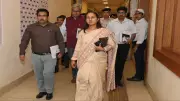
Jharkhand agriculture minister Shilpi Neha Tirkey conducted a surprise inspection of a fish market in Dhurwa, finding several lacunae. She directed officials to take corrective steps within 10 days and prepare an SOP.
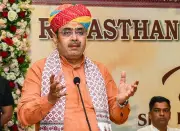
Rajasthan CM Bhajan Lal Sharma announced over 19 lakh pucca houses built under PMAY-G since 2016. Centre allocated Rs 3,283 crore; state targets Housing for All by 2029.
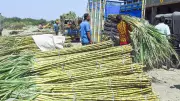
The government increased sugarcane FRP by Rs 10 to Rs 365 per quintal for 2026-27, benefiting nearly one crore farmers. The revised price is 2.81% higher than the current rate.

Ayodhya Development Authority issues second phase of master plan covering 766.39 sq km across three districts, integrating 353 villages and 1,200 ponds for sustainable urban growth.
Shared lists with real-time sync. No signup needed — just open and shop together.
Recommended
Gujarat RTE Result 2026 for Round 1 released on May 4. Check seat allotment for Class 1 admissions under 25% quota in private schools for 2026-27.
