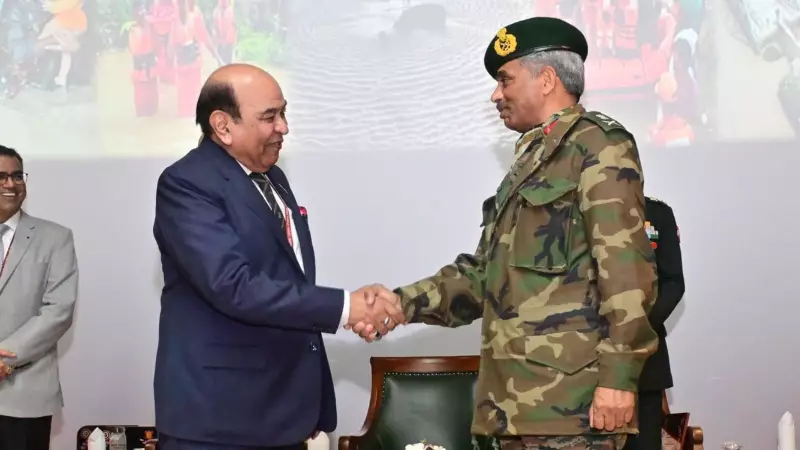
The Headquarters Western Command, in partnership with the National Disaster Management Authority (NDMA), successfully concluded the Western Command Disaster Management Conclave on Disaster Risk Resilience at Chandimandir. This significant event marks a pivotal step in strengthening India's disaster preparedness, shifting the national approach from reactive responses to proactive resilience building.
High-Level Gathering for Enhanced National Safety
The conclave brought together a distinguished assembly of senior military officials, NDMA policymakers, state disaster management representatives, and academic and technical experts. According to a statement from Western Command, the primary objective was to foster greater civil-military synergy and integrate advanced technologies into national disaster governance frameworks.
Key Addresses and Strategic Vision
The event commenced with a series of key addresses that outlined the vision for a more robust national safety framework. Lt Gen Syed Ata Hasnain (Retd), Member of NDMA, delivered the opening address, setting the tone for the discussions. This was followed by a keynote speech from Rajendra Singh, Member and Head of Department at NDMA, who emphasized the importance of collaborative efforts in disaster risk reduction.

In a plenary address, Lt Gen Manoj Kumar Katiyar, General Officer Commanding-in-Chief of Western Command, reiterated the Indian Army's role as the preferred responder in extreme crisis situations. He highlighted the military's commitment to supporting civil authorities during disasters, ensuring swift and effective relief operations.
Focus on Military-Civil Fusion and Operational Efficiency
Discussions at the conclave heavily focused on military-civil fusion, with Manish Bharadwaj, Secretary of NDMA, and Lt Gen Ajay Chandpuria, General Officer Commanding 11 Corps, exploring ways to harmonize protocols. A key area of emphasis was maximizing the critical Golden Hour in relief operations, which is crucial for saving lives and minimizing damage during disasters.
Technical Sessions and Innovations in Disaster Management
The technical sessions highlighted innovations and lessons learned from recent disasters. Dr Kala Venkat Udhay from IIT Mandi presented advancements in remote sensing and landslide early warning systems, showcasing how technology can predict and mitigate natural hazards.
Mohammad Afzal, Joint Secretary at the Ministry of Power, spoke about reducing vulnerabilities in hydroelectric river basins, addressing the risks associated with infrastructure in disaster-prone areas. Commandant Santosh Kumar of the 7th Battalion NDRF shared operational insights and challenges from the 2025 floods, proposing solutions to improve resource mobilization for future urban and rural flooding scenarios.
Panel Discussions on State-Level Frameworks and AI Integration
A dedicated panel discussion featured KK Pant, Additional Chief Secretary of Himachal Pradesh, Snober Jamil from the State Disaster Management Authority of Jammu & Kashmir, and Mohsen Shahidi, DIG Operations at HQ NDRF. The panel examined gaps in state-level disaster management frameworks and explored the game-changing potential of artificial intelligence in enhancing disaster response and preparedness.
Exhibition of Indigenous Disaster Response Capabilities
An interactive exhibition showcased India's growing indigenous disaster response capabilities. The display included:
- AI-integrated next-generation early warning systems
- Satellite-linked communication modules resilient to network failures
- High-altitude rescue equipment
- CBRN (Chemical, Biological, Radiological, Nuclear) protection suits
- Advanced medical trauma kits
- Community outreach programs aimed at turning local populations into the first line of defence
Concrete Action Points for 2026
The conclave concluded with the identification of concrete action points for 2026. These include:

- Development of joint training calendars to enhance coordination between military and civil agencies
- Establishment of a unified command structure to improve inter-agency collaboration during disasters
- Integration of advanced technologies into existing disaster management protocols
- Strengthening community-based initiatives to build resilience at the grassroots level
This conclave represents a significant milestone in India's journey towards a more resilient and prepared nation, leveraging the strengths of both military and civil institutions to safeguard against future disasters.