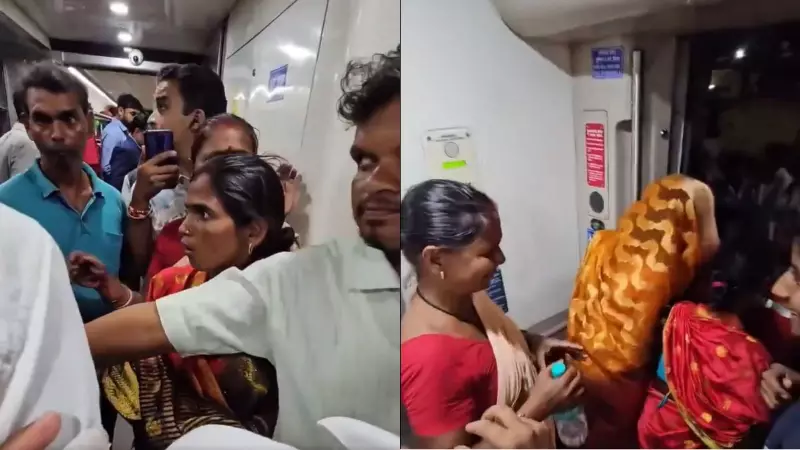
A viral video circulating on social media has sparked intense debate about civic responsibility, enforcement gaps, and infrastructure challenges in India's railway system. The footage shows a crowd of passengers boarding a Vande Bharat train in Bihar, allegedly without tickets, creating a scene that has divided public opinion across digital platforms.
Viral Video Captures Overcrowded Vande Bharat Coach
The approximately 20-second clip, which has been widely shared across multiple social media platforms, reveals the interior of the semi-high-speed train packed far beyond its intended capacity. Vande Bharat services are positioned as premium offerings by Indian Railways with fully ticketed systems, making the apparent breach of protocol particularly striking to viewers nationwide.
Warning Issued Before Departure
In the video, a voice from behind the camera can be clearly heard warning passengers to disembark before the doors close. The warning states in Hindi: "Utar jaaiye aap log, gate band hone wala hai. Gaadi chalegi, fass jaaiyega" which translates to "Please get down, the doors are about to close. The train will start and you'll get stuck." Following this urgent caution, several individuals are seen stepping out of the crowded coach, though the video doesn't clarify whether all unauthorized passengers exited before departure.

Online Reactions Highlight Divided Perspectives
The clip has been reposted by numerous accounts on X (formerly Twitter) and has accumulated lakhs of views, with comment sections becoming battlegrounds for contrasting viewpoints about the incident.
Calls for Stricter Enforcement
One user advocated for enhanced access control measures, suggesting: "Airport jaisa ticket gate hona chahiye. Tabhi crowd aur misuse control hoga" meaning "There should be airport-like ticket gates. Only then will crowds and misuse be controlled." This perspective emphasizes the need for technological and procedural solutions to prevent similar occurrences.
Civic Responsibility Debate
Another comment took a more critical stance toward passenger behavior, stating: "Civic Sense is the main issue in India. Ye gareeb ke naam par har galat kaam jaan bujh kar karte hain" which translates to "Civic sense is the main issue in India. In the name of poverty, people knowingly do all kinds of wrong things." This viewpoint places responsibility squarely on individual conduct and societal values.
Counterarguments Emphasize Socioeconomic Factors
Pushing back against critical perspectives, a third user wrote: "They are poor people and innocent look at their faces they aren't aware please dont make derogatory remarks." This response highlights empathy and consideration for socioeconomic circumstances that might drive such behavior.
Middle-Class Frustration Emerges
A fourth comment reflected frustration from a different demographic perspective: "Anyone who feels bad for this just know, the middle class actually are the only ones paying tax & wanting a decent ride on a train only for people that contribute to nothing using it and ruining everything. So no I don't feel bad." This statement reveals tensions between different socioeconomic groups regarding public resource utilization.
Broader Implications for Railway Management
The incident raises important questions about several interconnected issues facing India's railway infrastructure:

- Enforcement Challenges: The apparent ease with which ticketless passengers boarded a premium train suggests potential gaps in security and verification protocols at stations.
- Capacity Constraints: The overcrowding visible in the video points to possible mismatches between demand and availability on premium rail services.
- Service Experience: Such incidents potentially compromise the premium experience that Vande Bharat trains are designed to offer paying passengers.
- Public Perception: Viral content of this nature affects public confidence in railway administration and premium service delivery.
It remains uncertain whether the individuals seen in the coach were attempting to travel without tickets or had boarded simply to experience the new train model temporarily. Regardless of intent, the visual documentation has triggered broader conversations about civic responsibility, infrastructure management, and social equity in access to public transportation services across India.