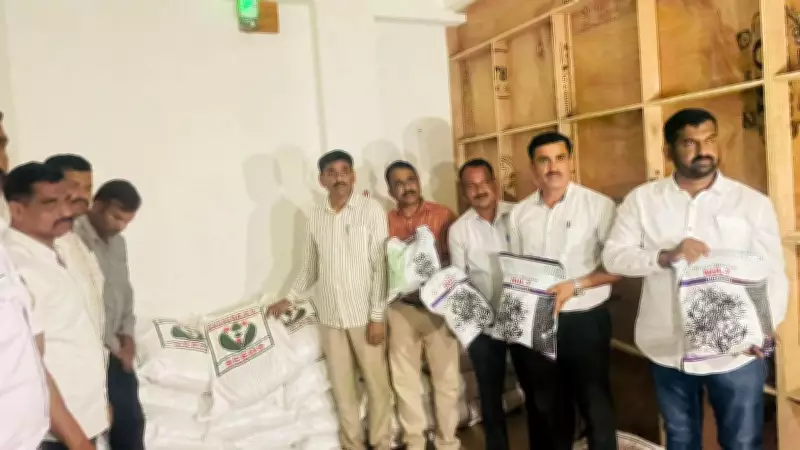
The Solapur agriculture department on Tuesday seized 816 bags of untested urad seeds valued at Rs 16 lakh, which were being sold illegally under the name and packaging of a commercial brand. The seeds, of the NUL 7 (Vishwas) variety and weighing a total of 4,080 kg, were confiscated from locations in Akkalkot and Barshi. Officials discovered that the seeds had not been tested for germination rate or quality.
Two FIRs Filed Against Proprietor
Two first information reports (FIRs) have been registered against Ratnakar Raghunath Kole, who operates Swami Samarth Krushi Seva Kendra in Shelgaon, located in the neighboring Dharashiv district. Kole is suspected to have brought the seeds for sale in the region.
Seed Samples Sent for Testing
Haridas Hawale, the agriculture development officer, stated, “We have sent the seed samples to the lab for testing the quality. After soybean, urad is a major Kharif crop in Solapur, and its sowing starts after June 15. The proprietor of the firm copied the label of a branded seed company and marketed the seeds under a different brand name. The source of procurement is not yet known.”

During the search in Akkalkot, officials found that 80 bags had already been sold. Hawale urged farmers who purchased seeds from the proprietor to contact taluka officials and file complaints.
Authorities Caution Farmers
Agriculture authorities have issued a warning to farmers regarding seed purchases. “Farmers must scan the QR code printed on the seed bag to verify the source and its journey to the retailer. They should ask retailers for the original invoice of their payment to the company so that batch numbers can be checked. Additionally, through the SATHI portal launched by the Government of India, farmers can trace the journey and authenticity of the seeds,” Hawale explained.
Impact of Seizure
Each bag, weighing 5 kg and containing the seeds, is sufficient for sowing one acre. “This means the agriculture department not only stopped the sowing of untested seeds on 816 acres but also helped farmers avoid significant losses, both in terms of the money they would have spent and the potential yield,” Hawale added.