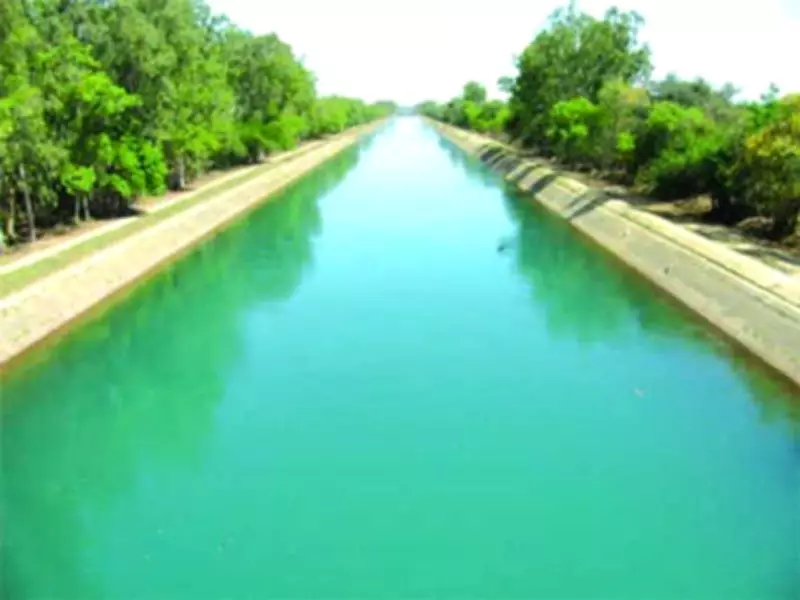
The Punjab government is set to abolish the water cess levied on the use of canal water for irrigation. The cess, introduced by the previous Akali-BJP government in 2014 to replace the traditional 'abiana' irrigation charge, has generated minimal revenue and failed to encourage canal water usage.
Chief Minister's Directive
Chief Minister Bhagwant Singh has directed the Water Resources Department to draft a proposal to waive the water cess. The move aligns with his government's focus on maximizing canal water utilization and curbing the over-extraction of groundwater, which has led to desertification concerns in the state.
During a recent review meeting, Mann highlighted that while farmers receive substantial power subsidies for groundwater extraction, they are still charged a cess for canal water. Removing this charge is expected to incentivize a shift from tube-well irrigation to canal-based irrigation.

Negligible Revenue Collection
Official data reveals that over the past four years, the government targeted collecting Rs 360 crore from the water cess but managed only Rs 3.75 crore—a mere 1.04% of the target. Officials acknowledge that the cess has contributed negligibly to state revenues.
The water cess was introduced in 2014 after amendments to the Indian Canal and Drainage Act, 1873. Under the policy, farmers were charged Rs 50 per acre per crop for canal water use, with the revenue intended for maintenance and modernization of irrigation infrastructure. The government had initially estimated annual collections of Rs 100 crore.
Historical Context
Before the water cess, farmers paid 'abiana' at Rs 150 per acre. In January 2010, the Punjab Cabinet decided not to recover outstanding 'abiana' dues. When farmers later stopped paying the water cess, the government attempted stricter enforcement in 2015 by closing irrigation outlets to defaulters, but protests forced a withdrawal.
Groundwater Subsidy Burden
Punjab continues to provide free electricity for agricultural tube-wells, with each connection receiving an average annual subsidy of about Rs 55,000. The state has approximately 13.91 lakh tube-wells, and the subsidy burden is rising annually. The waiver of water cess is part of a broader plan to restore watercourses and ensure canal water reaches tail-end farms, thereby reducing dependence on groundwater.